Discussion Films
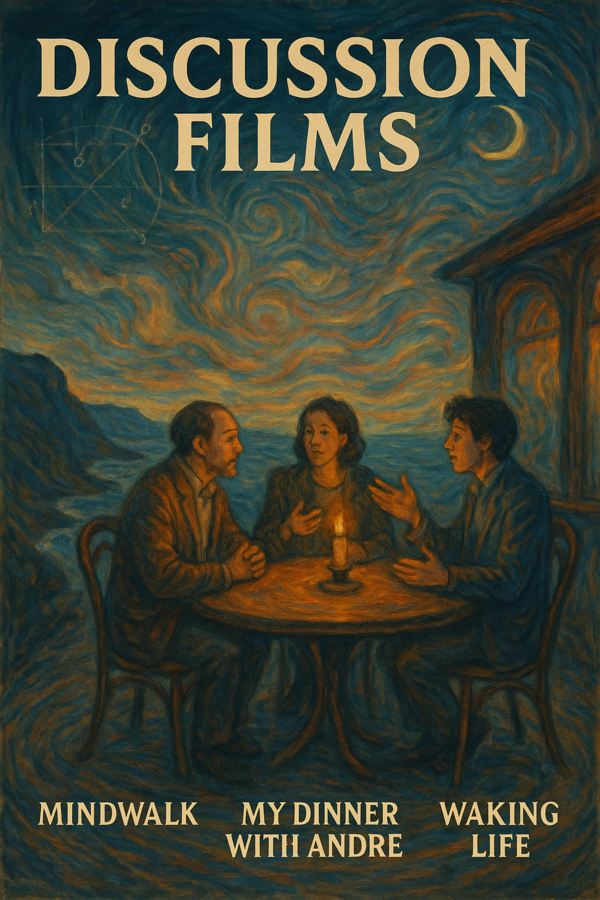
3 films See all 3 films ↓3 films across 3 decades, grouped together as 3 ideal examples of a particular, rare kind of movie: the discussion film. All three consist of little more than people talking to each other about things that genuinely matter to them, with almost nothing else happening on screen — and all three turn out to have more interesting, specific histories behind them than their quiet surfaces suggest. For what it's worth, a professional critic reviewing Mindwalk independently made almost this exact connection, naming My Dinner with Andre as the obvious reference point for what this kind of film is even doing — this isn't just a private pattern, it's a real, if rare, mode other people have noticed too.
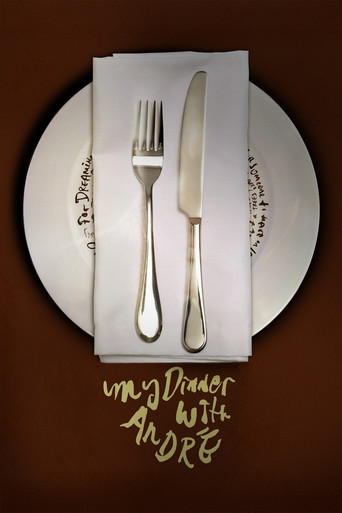
My Dinner with Andre (1981) is based on a real friendship — playwright Wallace Shawn and theater director André Gregory, playing versions of themselves, discussing things that draw from their actual lives and conversations. What's genuinely surprising is how deliberately constructed the "naturalism" is: this is a fully scripted 180-page screenplay, shot on 16mm magazines that held exactly ten minutes of film, meaning every single take ran ten minutes start to finish. Director Louis Malle has said outright that "the point was to give the impression that it was completely improvised" — it wasn't. He gave Gregory one simple, famous note, "speak faster," after realizing he was "trying to act too much," and told Shawn that his instinct toward visible irritation would read as fake. Malle had also, half-seriously, floated Dustin Hoffman and Robert Redford for the leads before Shawn and Gregory flatly refused to let anyone else play themselves. The film nearly closed after six disastrous weeks in New York theaters before Siskel and Ebert's rave reviews turned it around — both later named it among their personal favorite films of the entire decade.
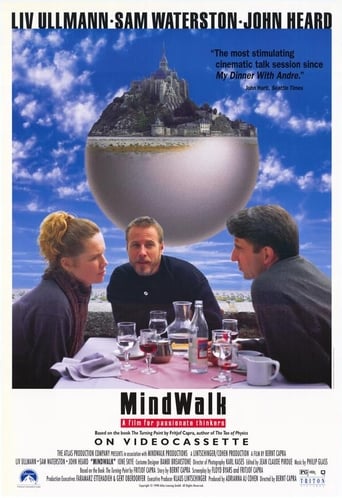
Mindwalk (1990) is a real family collaboration, not just an adaptation: physicist Fritjof Capra co-wrote the screenplay based on his own nonfiction book, and the director, Bernt Capra, is his actual brother. The project took nearly ten years to reach the screen, starting as a planned BBC television documentary. At one point Bernt, who had a background in production design, wanted to set the entire conversation inside an elaborate, special-effects-built imaginary structure, with each room representing a different stage of his brother's argument, before the Mont Saint-Michel setting won out instead.
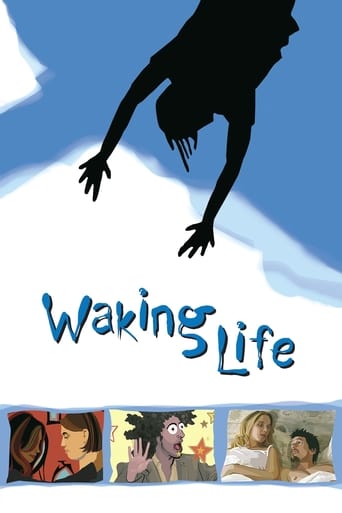
Waking Life (2001) started as an idea Linklater carried around literally from his senior year of high school, decades before he had any way to actually make it. The film is a genuine technical landmark, not just a stylistic choice — the first feature ever made using digital rotoscoping, built on custom software called Rotoshop that animator Bob Sabiston developed specifically for this kind of frame-by-frame tracing over live-action footage. Thirty animators across Austin worked on it. Linklater has said he got so immersed in the subject matter that he started having lucid dreams of his own again during the shoot. Speed Levitch, the eccentric New York tour guide who shows up partway through, is a real person Linklater had encountered through the 1999 documentary The Cruise, not an invented character. One honest complication worth noting: Ethan Hawke and Julie Delpy do appear here, explicitly reprising their Before Sunrise characters in a brief, dreamlike cameo — a real connective thread between this collection and the trilogy it's deliberately kept separate from.
That separation is worth stating plainly, not glossing over: the Before films use conversation to chart a specific relationship changing across decades — what these two particular people want, at twenty-something versus thirty-something versus forty-something, and how that evolves them both. These three films are doing something adjacent but different: using conversation to explore the ideas themselves — theater and reality, systems theory, the nature of consciousness — more than any specific relationship between the people having it.