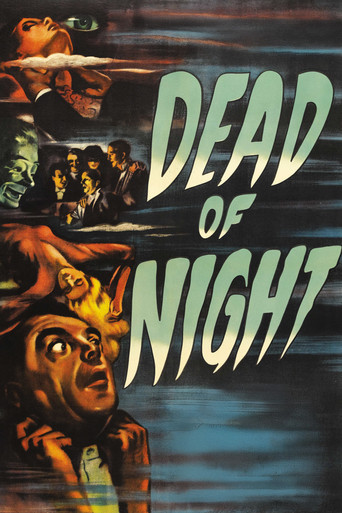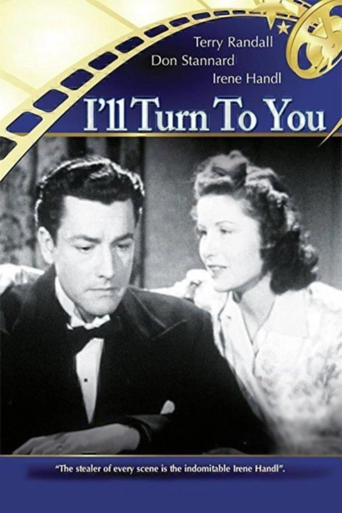
The UK returns to cinema after war
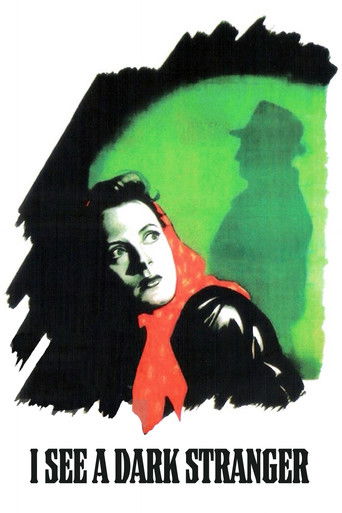
20 films See all 20 films ↓British cinema before this point — melodrama, crime pictures, even films dealing with death directly — kept a layer of distance between the audience and whatever was on screen, calibrated not to offend and to hold a general audience's sympathy. For six years, British wartime culture had maintained something close to a performance of calm alongside it: the stoic, keep-calm-and-carry-on posture that held civilian morale together through a war that could still be lost. The historian Angus Calder later argued that this stoicism was itself substantially a constructed and propagated narrative, reinforced by government and press, rather than a simple fact of how people actually felt under the bombing. Whether or not it was ever fully genuine, it had a real function. Once victory removed the need to keep performing it, whatever it had been managing didn't just disappear — and the films that came out of Britain once production was back in civilian hands no longer keep that earlier distance.
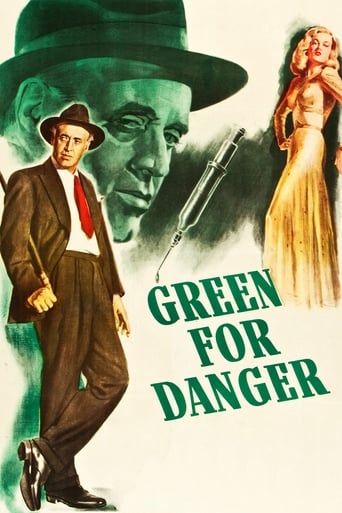
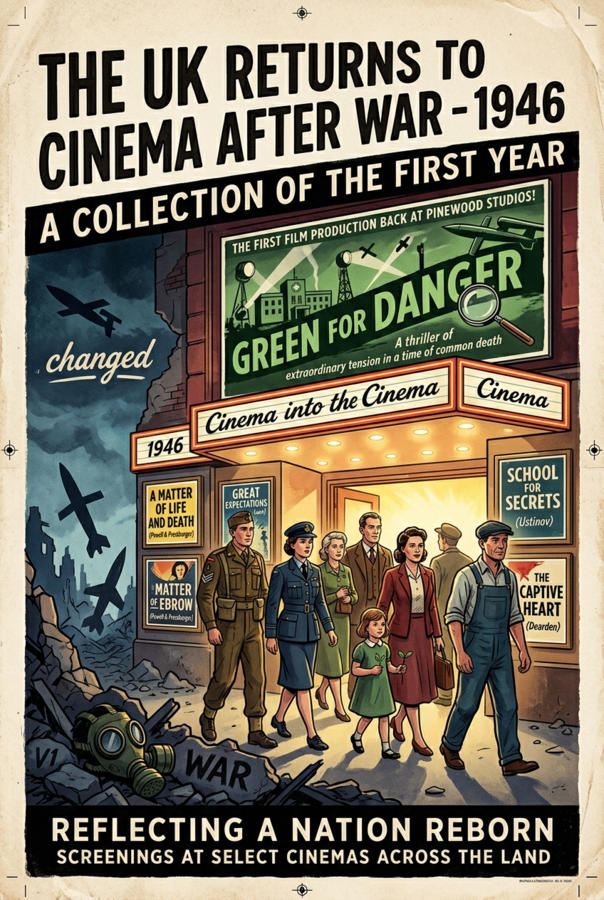
Green for Danger (1946) is as direct an illustration as the era produced. Sidney Gilliat's hospital murder mystery was shot the moment Pinewood Studios was handed back for civilian production, set among medical staff working under the V-1 bombing campaign. Critics have independently read it as a study of the psychological toll of years spent maintaining that same idealized calm — the cost becoming visible once it no longer has to be maintained. It plays like a film that doesn't have to keep up the performance anymore.
Victory didn't bring material relief either. Lend-Lease, which Britain had relied on for basic goods including food, was cut off within days of Japan's surrender, and Britain spent the following year negotiating an emergency American loan just to stay solvent. Bread itself was rationed for the first time in the country's history in July 1946 — not during the war, when U-boat packs were sinking the supply convoys, but after it, once the cushion that had carried the country through the war was gone.
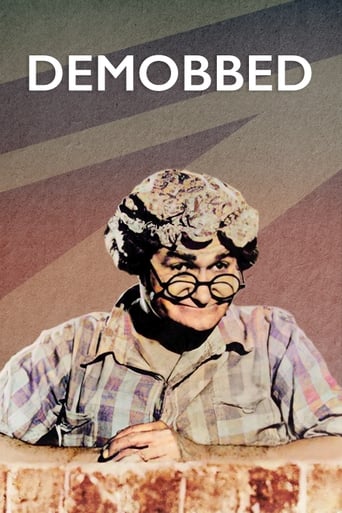
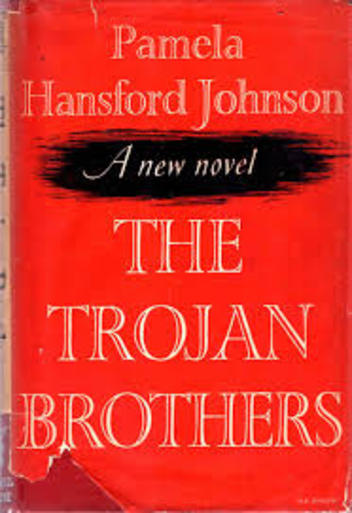
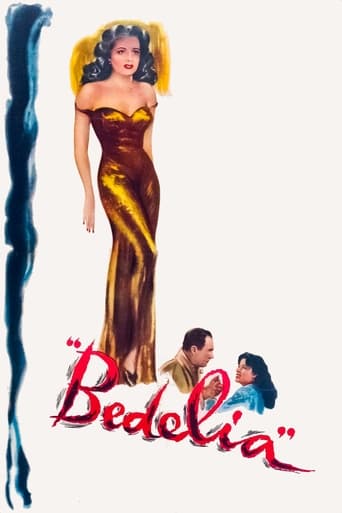
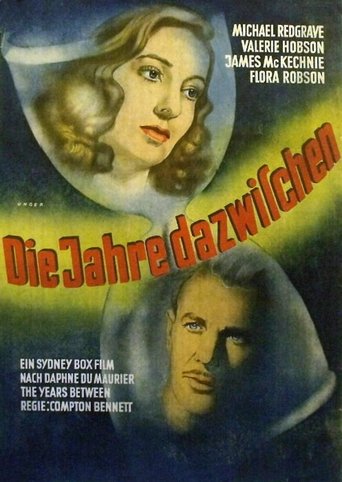
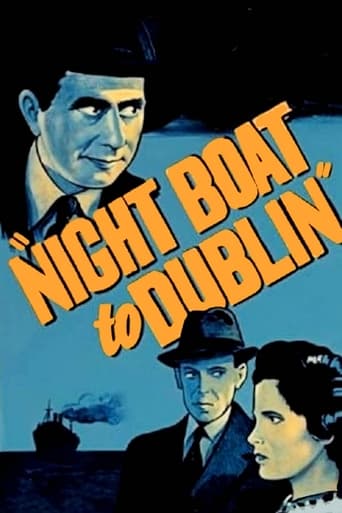
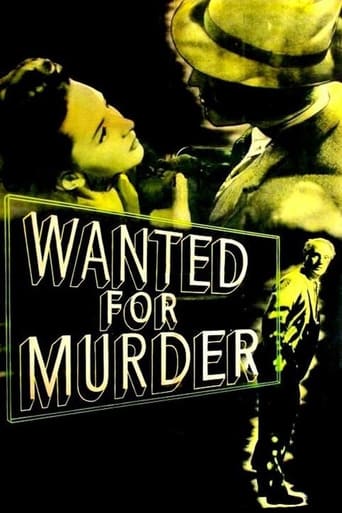
The same loosening shows up twice more in this set. A cluster of crime and murder pictures — Appointment with Crime, Wanted for Murder, Bedelia, The Trojan Brothers, Strangler's Morgue, Night Boat to Dublin — belongs to the same rationing-era anxiety about black-market crime that was producing Britain's broader postwar "spiv cycle," helped along by censors who had grown markedly more permissive about homegrown crime stories than they had been before the war. The Captive Heart and The Years Between treat the simple fact of coming back alive as more complicated than relief: one about a Czech escapee who survives a POW camp by posing as a dead British officer and has to decide whether to keep up the lie once he's home corresponding with the dead man's widow, the other about an MP presumed killed who returns after three years to find his wife has taken his seat in Parliament and moved on. Demobbed, made two years earlier while the war was still on, got there first in a much lighter register — the same displacement, played for laughs, before anyone knew what the real return would feel like.
The American case was genuinely different, and not only because the postwar economy was booming instead of rationing bread. No American city had spent years under sustained bombing, so there was no equivalent performance to drop. What darkness turns up in American film that year reads as personal rather than national: It's a Wonderful Life (1946) pivots on a suicide attempt, and the rawness James Stewart brings to it is usually traced to his own experience as a bomber pilot over Germany rather than to anything a general audience was collectively working through. Contemporary American audiences didn't know what to do with it — the film lost money and fell out of circulation for decades before television made it the fixture it is now. The equivalent British material found its audience immediately. The sternness didn't last, either — it hardened into the conformist conservatism of 1950s Britain, which produced its own reaction a decade-plus later, running from Dudley Moore's stage satire at the start of the 1960s through to Monty Python by the decade's end.
The US had something in the same vein, but it was limited to those who had seen too much, but still had to communicate to an audience that hadn't, and unlike the UK, the post-war was a boom time. You can see it in the works of someone like Frank Capra, in his work before the war, and then something like "It's A Wonderful Life" in 1946. It's not dripping in a new attitude, but there's definitely a new darkness that wasn't present in earlier Capra work. The entire plot centers around a suicide, for example.