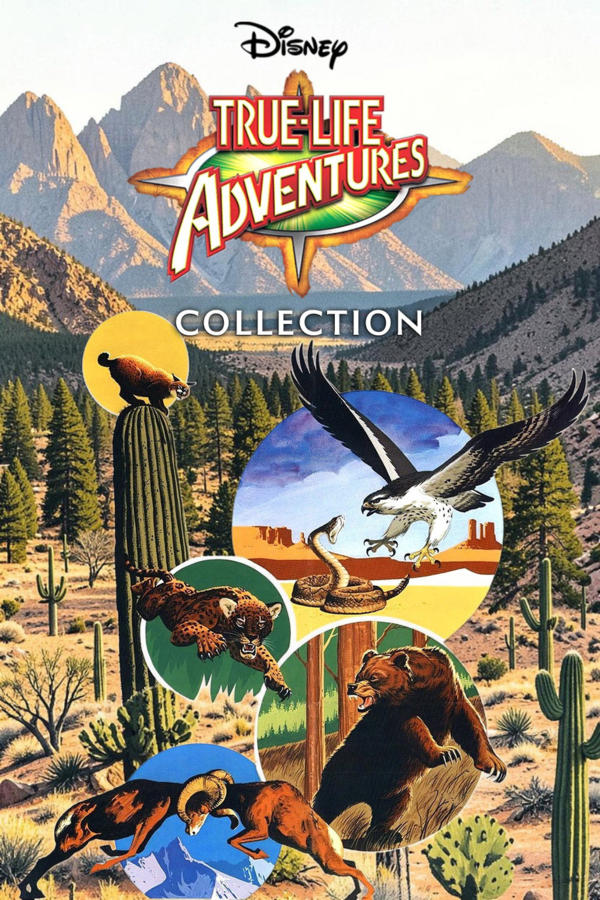
True-Life Adventures Collection
6 films See all 6 films ↓The series grew out of the nature research Walt Disney's studio had been doing since the late 1930s for Bambi, when it became clear that footage of real animals could carry a film on its own rather than just serve as animation reference. In 1946, Disney sent photographers Alfred and Elma Milotte to Alaska to document wildlife; he visited himself the following year. Sorting through their footage, he fixated on the seals, and asked the Milottes to refocus specifically on seal life with no trace of people in frame. The result became Seal Island (1948), the first entry in the series, though it isn't part of this collection.
RKO, Disney's distributor at the time, didn't think audiences would sit through a nature documentary and didn't want to release it. Disney booked a single qualifying week at a friend's Pasadena theater just to make it Oscar-eligible — and it won the Academy Award for Best Short Subject anyway. The series grew from shorts into features starting with The Living Desert (1953), which was also the first film Disney released through its own new distribution arm, Buena Vista, rather than through an outside studio.
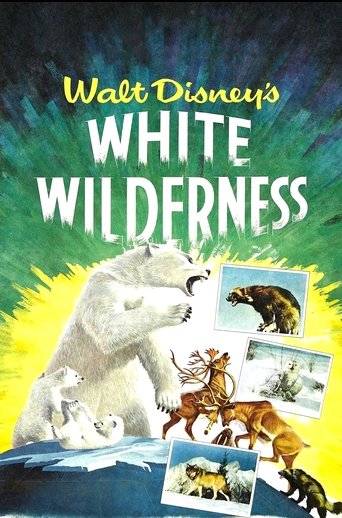
James Algar directed most of the series, including Seal Island, The Living Desert, and White Wilderness (1958), the third and last True-Life Adventure to win the Documentary Feature Oscar. White Wilderness is also the series' most notorious entry: its famous scene of lemmings marching to a cliff and leaping to their deaths — long cited as proof of lemming "mass suicide" — was staged. The lemmings were flown in from Hudson Bay, filmed on a rotating, snow-covered turntable to fake a migration, and driven off a cliff into a river. A Canadian television investigation exposed the fabrication in 1982, decades after the film helped cement a myth about the species that still circulates today.
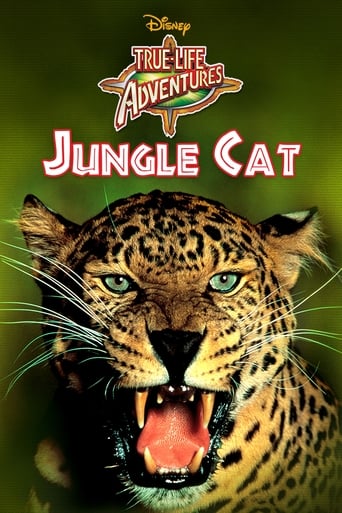
Jungle Cat (1960) closed out the series as its final feature, with narrator Winston Hibler's voice a constant across nearly the entire run.