The collections
Gathly Media
Pick a collection to read what it is and why it exists, and to see every film in it.
Happy Halloween
Featured collections
Chosen by hand and changed with the season.
 Happy Halloween - A Movie For Every Day of October29 filmsIt's Spooky Month, and this is just the beginning of the Spooky Month Collections. This month we celebrate October, Halloween and all things scary. This collection has a movie to watch every day in October. Also, this list contains the least extreme titles of horror for those who just aren't into the other stuff.Read more
 SUPERNATURAL HORROR28 filmsSupernatural Horror ***FOR MY SISTER*** No rational explanations. No unreliable narrators, waking dreams, or metaphors for grief and mental breakdown. The films in this collection operate on a single principle: the entity is real, malevolent, and cannot be reasoned away by science or psychology. Spanning classic hauntings, international demonology, and relentless paranormal incursions, these stories prioritize genuine dread, deliberate tension, and atmospheric terror over empty jump scares and cheap gore. When the door slams or an unseen presence takes hold, it isn't in anyone's head—it's in the room.Read more
 Horror Movies From 202630 filmsHorror Movies that were released in the year 2026Read more
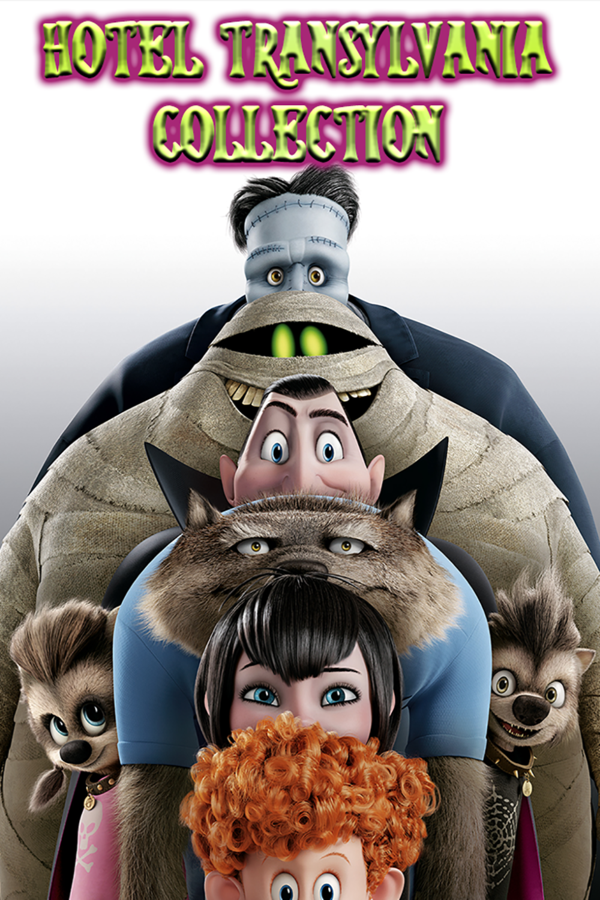 Hotel Transylvania Collection4 filmsAn animated film series centered on Count Dracula and his daughter Mavis running a "human-free" hotel for monsters.Read more
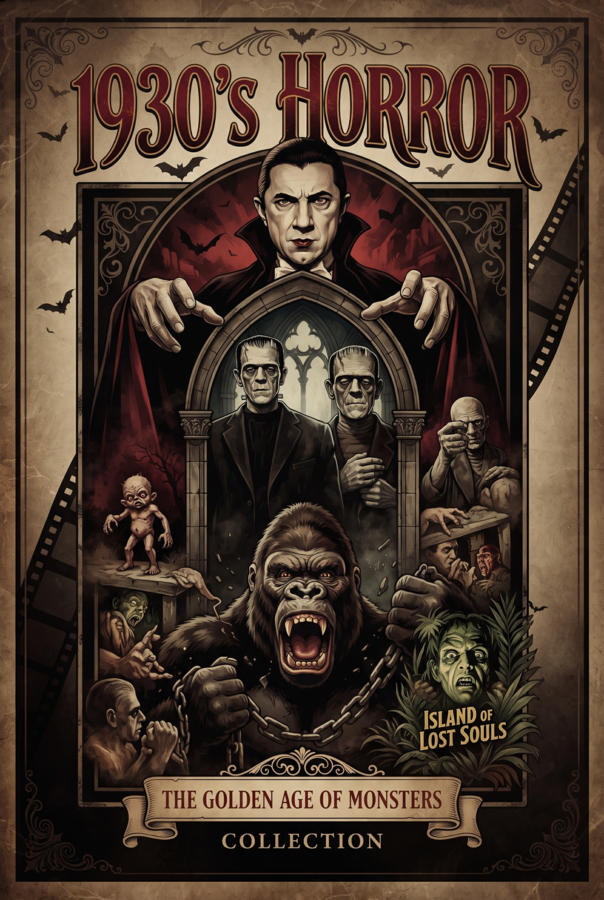 1930's horror78 filmsThe decade was completely dominated by Universal Pictures, which launched the first major cinematic universe of monsters. Following the massive box office success of Dracula and Frankenstein in 1931, the studio established a formula that combined gothic atmosphere with tragic, misunderstood villains. Horror in the 1930s borrowed heavily from German Expressionism, a style brought over by European filmmakers fleeing political unrest. Directors used dramatic chiaroscuro lighting (sharp contrasts between deep shadows and bright light), distorted sets, and fog-drenched landscapes to create an atmosphere of psychological dread and gothic romance. This look became the permanent visual shorthand for haunted castles, mad scientist laboratories, and misty graveyards. The decade was sharply divided by Hollywood censorship: Pre-Code Horror (1930–1934): Before enforcement of the Motion Picture Production Code (Hays Code), filmmakers pushed boundaries with surprisingly intense themes. Movies like Freaks (1932) and Island of Lost Souls (1932) explored body horror, mutilation, and dark sexuality. Post-Code Shift (1934 onward): Once the strict censorship guidelines were enforced, direct violence and psychological perversion were toned down. Filmmakers had to rely more on suggestion, suspense, and atmospheric dread, which arguably heightened the artistic sophistication of late-30s horror. The psychological weight of the Great Depression heavily influenced how audiences consumed these films. The monsters of the 1930s were rarely pure evil; instead, they were often tragic figures forced into existence by science gone wrong, curses, or societal rejection. Audiences deeply resonated with these themes of alienation, loss of control, and being at the mercy of larger, unexplainable forces.Ultimately, 1930s horror took low-budget pulp stories and elevated them into high gothic art, creating a blueprint that filmmakers still copy today.Read more
 GHOSTS AND HAUNTING30 filmsGhost and haunting films occupy a distinct psychological space within horror, pivoting away from physical pursuit or visceral gore toward atmosphere, dread, and the inescapable weight of the past. Rather than confronting a tangible monster that can be physically fought or evaded, characters in haunting narratives face disembodied presences tethered to specific locations, objects, or unresolved historical traumas. The genre trades on the subversion of safety: the home, the asylum, or the isolated estate—sanctuaries meant to protect the living—are revealed to be permeable boundaries where the dead retain agency. Through slow-burn pacing, uncanny sound design, and shifting spatial geometry, haunting films externalize internal anxieties such as grief, guilt, madness, and the fear of being forgotten. Thematic Pillars Derived from This Collection Spanning classic gothic cinema, 1970s and 80s haunted house touchstones, J-horror benchmarks, and modern supernatural thrillers, this 30-film collection emphasizes several recurring thematic currents: 1. The Violation of the Domestic Sanctuary A defining thread across properties like The Amityville Horror, Poltergeist, The Changeling, and Insidious is the inversion of home as a safe haven. Here, the domestic space becomes a trap, demonstrating that architecture is never truly neutral; it absorbs the violence, secrets, and structural flaws of its builders and inhabitants. 2. Grief, Guilt, and Psychological Projection Many entries use the supernatural as a direct metaphor for emotional trauma and psychological decay. Films such as The Others, The Orphanage, Session 9, Stir of Echoes, and Jessabelle blur the line between actual ghosts and the crushing weight of survivor's guilt, dementia, or repressed memory, questioning whether the entity haunting the protagonist is external or a manifestation of a fractured mind. 3. Architectural Memory and Generational Sin Gothic and historical hauntings—exemplified by Crimson Peak, The Woman in Black, The Awakening, and The Legend of Hell House—focus on institutional corruption and ancestral culpability. In these stories, the past cannot be buried; physical structures built on exploitation, murder, or institutional abuse retain a malignant momentum that demands reckoning from the living descendants or investigators who cross their thresholds. 4. Contagious Malice and Inescapable Curses Moving away from localized hauntings, works like The Grudge, Dark Water, The Fog, Lights Out, and Oculus present supernatural forces as viral or systemic. The hauntings in these films are not bound to a single room or house, but cling to objects, water systems, curses, or darkness itself, rendering spatial flight useless. 5. Epistemological Dread and Skepticism A recurring narrative engine in films like Oculus, Session 9, Ghost Stories, Hide and Seek, and The Autopsy of Jane Doe involves rationalists, scientists, or skeptics forced to confront phenomena that defy empirical analysis. The horror arises not just from the threat itself, but from the systemic erosion of logic, data, and sanity as objective reality collapses.Read more
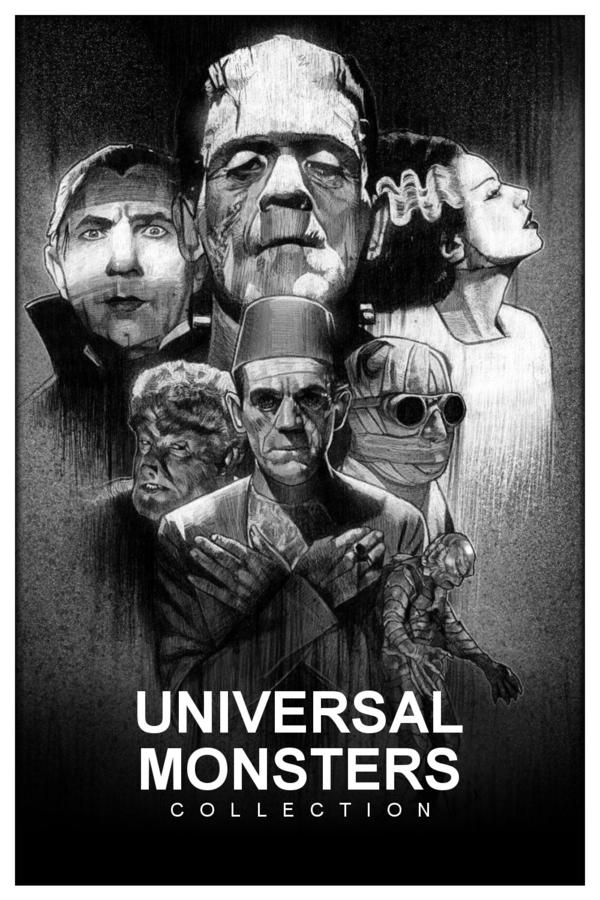 Universal Monster Movies24 filmsThis collection runs Universal's monster pictures from 1923 to 1956 — not one movement but four different working eras stitched together after the fact by studio brand and shared makeup artistry: Lon Chaney's silent star vehicles, the Depression-era horror cycle proper, the wartime crossover sequels, and a 1950s creature-feature coda. What holds it together is less a genre than a studio's house style: Universal, without a theater chain of its own, built its business on modestly budgeted genre product it could count on rather than prestige pictures. Dracula and Frankenstein, both released in 1931, are generally credited with turning horror into a reliable Hollywood studio genre rather than an occasional prestige experiment. Cinematographer Karl Freund, fresh from Weimar-era German Expressionism, brought that visual language into Hollywood on Dracula and then directed The Mummy the following year; Bride of Frankenstein (1935) is widely regarded as the cycle's high point. Between them, these films set down the genre's founding vocabulary — the aristocratic vampire, the reanimated corpse, the sympathetic monster — that horror still draws on. The cycle's shape tracks the studio's fortunes as much as any artistic plan. Depression-era economics made cheap, dependable horror pictures attractive to a studio without deep pockets, and the stricter Production Code enforcement that began in 1934 shows in Bride's more careful tone. A 1936 change of ownership — the Laemmle family lost control after a production loan for Show Boat was called in — shut the genre down at Universal entirely for two years, until an independent Los Angeles theater's 1938 double-bill of Dracula and Frankenstein drew crowds large enough to summon police, and Universal rushed Son of Frankenstein into production to capitalize. Wartime conditions pushed the films that followed toward faster, cheaper crossover pictures, with Frankenstein's monster, Dracula, and the Wolf Man sharing billing rather than each carrying a film alone — a format broad enough that by 1948 it could be played for comedy opposite Abbott and Costello. The Creature pictures that close out this collection, from 1954 to 1956, are a distinct final phase: built for the era's 3-D fad, trading Gothic folklore for a prehistoric survivor uncovered by a scientific expedition. These films were mostly ordinary program pictures in their day; the "classic monster" canon was assembled afterward, largely through 1950s television syndication.Read more
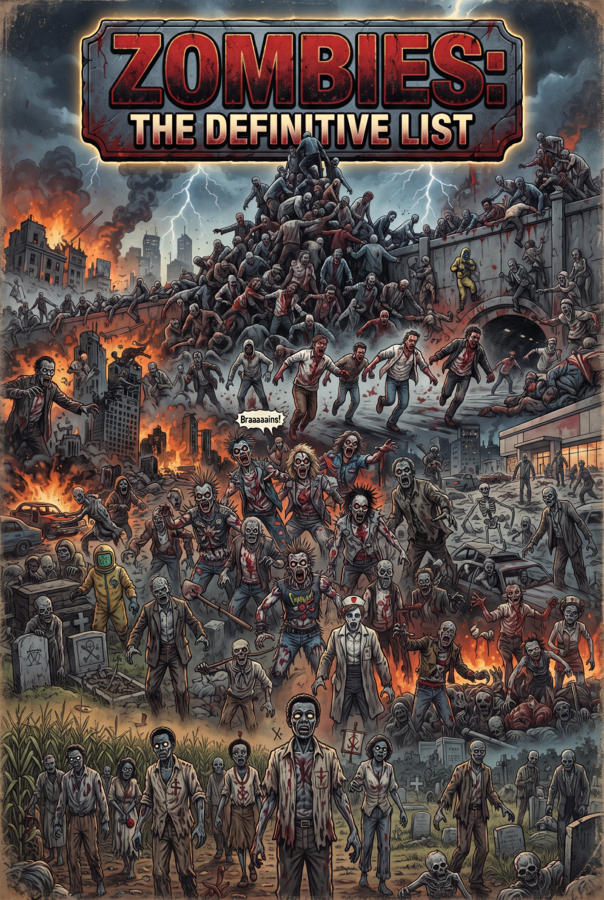 Zombies463 filmsThe history of the zombie is the history of societal anxiety, shifting from a localized fear of spiritual enslavement to a globalized dread of systemic collapse. Unlike vampires or werewolves, which possess individual agency or romanticized tragedy, the zombie is terrifying precisely because it lacks both. It is an unrelenting mass of attrition. Here is the comprehensive history and thematic evolution of the genre for your collection. 1. The Haitian Origins: The Horror of Enslavement (Pre-1968) The zombie did not begin as a flesh-eating monster; it began as a tragic victim. Rooted in Haitian Vodou and the trauma of French colonial slavery, the original zonbi was a corpse reanimated by a bokor (sorcerer) to serve as mindless, unpaid labor. For enslaved Haitians, the ultimate terror was not being eaten by a zombie, but becoming one—a fate where even death offered no escape from servitude. Hollywood imported this concept with White Zombie (1932), starring Bela Lugosi. For decades, cinematic zombies remained exoticized tools of mind control, rooted in foreign mysticism, voodoo tropes, and the loss of individual autonomy. 2. The Romero Paradigm Shift (1968–1985) George A. Romero fundamentally broke the mythos with Night of the Living Dead (1968) and forged the modern template. He stripped away the magic, vaguely replacing it with pseudo-science (radiation from a space probe), and introduced the three pillars of the modern genre: Cannibalism: The dead now wanted to eat the living. Contagion: A bite from the dead killed the living, who then resurrected as part of the horde. The Headshot: They could only be stopped by destroying the brain. Romero didn't actually call his creatures "zombies"—he referred to them as "ghouls." It was the public and critics who retroactively applied the term, forever altering its definition. Romero also turned the zombie into a blank canvas for social commentary. Night reflected the civil rights movement and Vietnam War disillusionment. His 1978 sequel, Dawn of the Dead, placed the survivors in a shopping mall, weaponizing the zombie as a metaphor for mindless American consumerism. Day of the Dead (1985) critiqued the military-industrial complex and scientific hubris. 3. The "Brains" Misconception and Splatter Comedy (1985) The talking zombies that say "brains." This comes from the work of Dan O'Bannon’s The Return of the Living Dead (1985). O'Bannon wanted to avoid infringing on Romero's copyrights, so he changed the rules. His zombies were created by a chemical spill (Trioxin), they were fast, they could talk, they specifically hungered for human brains to soothe the pain of rotting, and they could not be killed by a headshot. This film birthed the "Brains!" trope and introduced horror-comedy to the genre, branching zombies into mainstream pop culture parodies. 4. The Swarm and the Pandemic (2002–Present) The post-9/11 zombie wave—kicked off by 28 Days Later (2002) and the Dawn of the Dead remake (2004)—was less about hidden terrorist cells and heavily driven by global pandemic anxieties. 28 Days Later (which featured living humans infected with a blood-borne rage virus, not reanimated corpses) was born from fears of Ebola, HIV, and the UK's foot-and-mouth disease outbreak. These films introduced the "fast zombie." The terror shifted from the claustrophobia of Romero's slow, creeping death to the panic of highly contagious, hyper-aggressive vectors. The fear was no longer just the monster, but the fragility of global infrastructure, supply chains, and government competence in the face of an exponentially spreading disease. the later use of zombies piling up "like insects" is specifically linked to the 2013 film adaptation of World War Z. The filmmakers explicitly used swarm intelligence algorithms (modeled on ants and bees) to animate the hordes. This represented the ultimate fear of globalization: that in a hyper-connected world, humanity's sheer mass and density are our greatest vulnerabilities, leading to instantaneous, overwhelming systemic collapse. The Societal Mirror: Zombies vs. Body Snatchers Contrasting "Invasion of the Body Snatchers" themes versus zombies. Body Snatchers relies on the paranoia of subversion—the Cold War fear that your neighbor is secretly a communist, or the counter-cultural fear that your neighbor is a mindless conformist. The horror is internal and hidden. The zombie is the horror of the external and the inevitable. The zombie apocalypse narrative usually surfaces when society feels that its foundational institutions (police, military, government, science) are failing. The true antagonists in zombie media are rarely the zombies themselves; they are an environmental hazard, like a hurricane. The actual conflict is always the breakdown of the social contract among the human survivors. The zombie genre asks a cynical question: when the systems built to protect us collapse, how quickly will we turn on each other to survive?Read more
 DARK PSYCHOLOGICAL THRILLER/SUPERNATURAL45 filmsThis collection isn't organized around a monster, a killer, or even a genre in the usual sense — it's organized around a single refusal: the film won't tell you whether what's happening is supernatural or whether the person at the center of it is losing their mind, and it means to keep you there. Some of these films land close to one pole or the other. Most sit deliberately in between. That refusal has a specific literary ancestor. Henry James's 1898 novella The Turn of the Screw is usually credited with being the first major work to fully weaponize this ambiguity — a governess becomes convinced the two children in her care are being stalked by malevolent ghosts, and James never once confirms whether she's right or whether she's the danger. Critics have described its real achievement as moving horror's center of gravity from an external monster to the unreliability of the person telling you about it. That lineage runs directly into this collection: the novella's most direct cinematic descendant, The Innocents, in turn shaped The Others, which sits in this collection carrying the same structure four generations removed from its source. Repulsion, the collection's oldest entry, takes the ambiguity to its far end and removes it entirely — there's no ghost to argue about, just a woman's psychotic break rendered as pure cinema, and it remains one of the most influential films of its kind ever made. The collection's newest arrivals belong to a real, still-unresolved fight in film criticism. Starting around 2014, when critics singled out The Babadook's use of grief as monster, and picking up real momentum by 2019, a cluster of mostly A24-backed films got labeled "elevated horror" — dread built from atmosphere and metaphor rather than jump scares or gore. Horror fans and more than a few critics have pushed back hard on the term ever since, arguing it implies traditional horror is something lesser that these films had to be rescued from. Saint Maud is one of the films most commonly cited on both sides of that argument. This collection doesn't take a side in the fight so much as make it visible: decades of films built on exactly this technique, sitting next to the handful that a marketing term recently tried to claim as something new. What holds 1965 to 2021 together, then, isn't a visual style or a shared decade — it's one inherited narrative trick, dressed differently by each era that picked it back up.Read more
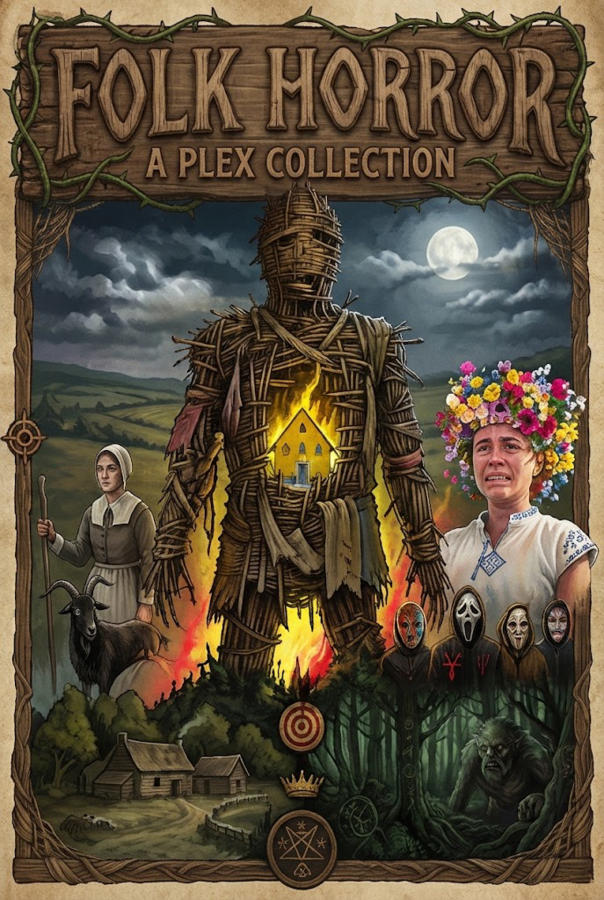 Folk Horror86 filmsThis collection isn't organized around a monster or a killer — it's organized around a structure of dread that critics later called a "chain": a rural landscape untouched by the modern world, a group of people cut off inside it, a belief system that grows warped by that isolation, and a violent culmination — a sacrifice, a summoning, a happening — that the rest of the film has been quietly building toward. No single figure recurs across these films the way Dracula or Michael Myers does. What recurs is the shape of the story: modernity arriving somewhere it doesn't belong, and losing. Folk horror is unusual among horror categories in that the name came decades after the films did. Piers Haggard, who directed The Blood on Satan's Claw in 1971, coined the phrase in a 2003 interview describing his own three-decade-old film, and it didn't catch on until Mark Gatiss used it in a 2010 BBC documentary, grouping Haggard's film with Witchfinder General (1968) and The Wicker Man (1973) into what's now called the genre's "unholy trinity." A formal definition — landscape, isolation, skewed belief, happening — didn't arrive until film critic Adam Scovell's 2017 book gave the category its working rules. For nearly forty years, in other words, these were just strange, singular British films with nothing officially connecting them; the genre had to be noticed before it could exist. The Wicker Man's own survival is as dramatic as anything in the film itself. It was made by British Lion, a studio already in serious financial trouble, and before it was even finished a boardroom takeover replaced its backers with new management that reportedly hated the film and judged it unprofitable. The finished cut was trimmed down and released in Britain as the lesser half of a double bill, playing underneath Don't Look Now rather than on its own. The original negatives were later lost entirely — by one persistent account, destroyed as landfill during the construction of a motorway near the studio — and the film survives today only through a patchwork of surviving prints and a videotape copy. Its reputation as one of the best British films ever made was rebuilt almost from nothing, driven substantially by Christopher Lee touring America at his own expense to introduce it in person. That near-erasure, and the genre's own decades in the critical wilderness before anyone named it, are really the same story told twice: a mode of horror repeatedly judged unmarketable or unclassifiable in its own moment, preserved mostly by the people who happened to love it, and only much later recognized as one of the most influential things British horror ever produced.Read more
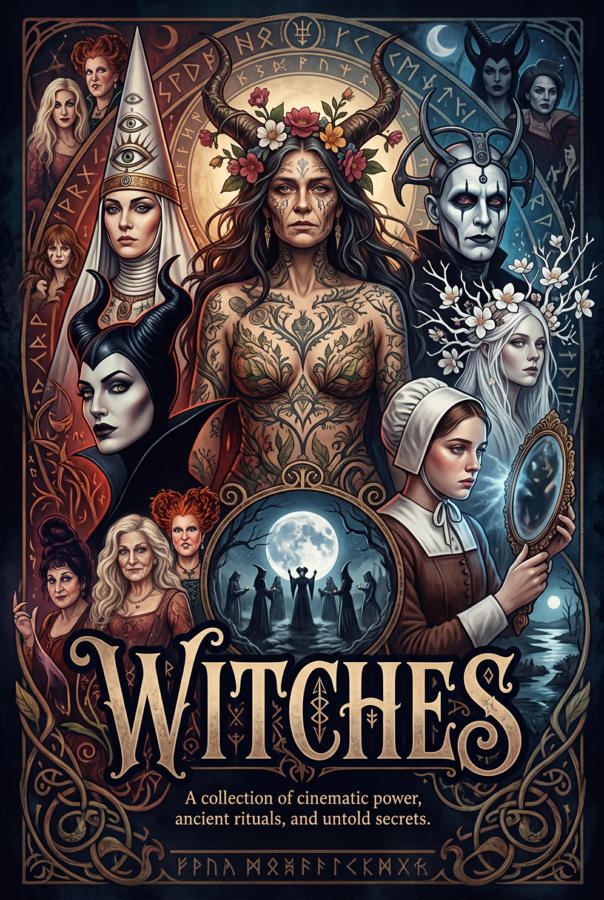 Witches164 filmsWitches are one of horror's oldest recurring figures, and one of the strangest: unlike vampires or reanimated corpses, the witch hunt is real, documented history, which means this collection has spent a century adapting an atrocity rather than a myth. That tension shows up at the very start of witch cinema. Benjamin Christensen's Häxan (1922) built its dramatized medieval torture and satanic-ritual sequences directly from the Malleus Maleficarum, the era's best-known witch-hunting manual, framing the whole film as scholarly history rather than fantasy — right down to a closing chapter arguing that what looked like witchcraft was often untreated mental illness. It was the most expensive Scandinavian silent film ever made, and it was banned in the United States and heavily censored almost everywhere else for its content. Even in a genre built on real persecution, Häxan is the rare film that tried to look directly at the historical record rather than just borrow its imagery. Where witch cinema really becomes a genre in its own right is a short, specific window in British film: Witchfinder General (1968), The Blood on Satan's Claw (1971), and The Wicker Man (1973), retroactively grouped by critics as the "unholy trinity" of folk horror. None of the three did much business on release; all three became the template the genre still runs on — rural landscapes, pre-Christian belief pushing back against a brittle Christian order, and dread that lives in daylight fields rather than dark castles. Witchfinder General is the sharpest example of how close this genre stays to its real source material: it's a dramatization of Matthew Hopkins, the self-appointed "Witchfinder General" of the English Civil War era, a private citizen with no official authority who was personally responsible for something like a fifth of all witch executions in British history. The cycle went quiet for decades before critics started using the same "folk horror" language again for the genre's 2010s revival. The history under all of this is bigger and messier than most of these films let on. Modern historians put the confirmed European execution toll for witchcraft in the tens of thousands — at least 12,000 documented cases, with broader scholarly estimates running to 35,000–50,000 — concentrated especially in the fragmented territories of the Holy Roman Empire, nowhere close to the millions sometimes claimed in popular accounts, but a real, sustained wave of state and religious violence lasting centuries. The Malleus Maleficarum itself is a stranger document than its reputation suggests: its author, a Dominican inquisitor named Heinrich Kramer, had it published under a forged endorsement, and the Inquisition's own senior theologians at Cologne formally condemned it for recommending illegal procedures and contradicting actual Church doctrine. It was rejected by the authority it claimed to speak for — and became a bestseller anyway, more influential on the popular imagination of what a witch hunt looked like than on the actual legal machinery of one. Cinema, this collection included, has mostly inherited the popular version. What holds these films together, then, isn't a monster or a mask but a real historical event that cinema keeps returning to from different angles — as scholarly reenactment, as folk-horror allegory, as history dramatized closely enough to name its real perpetrators — never quite settling on one honest way to look at it.Read more
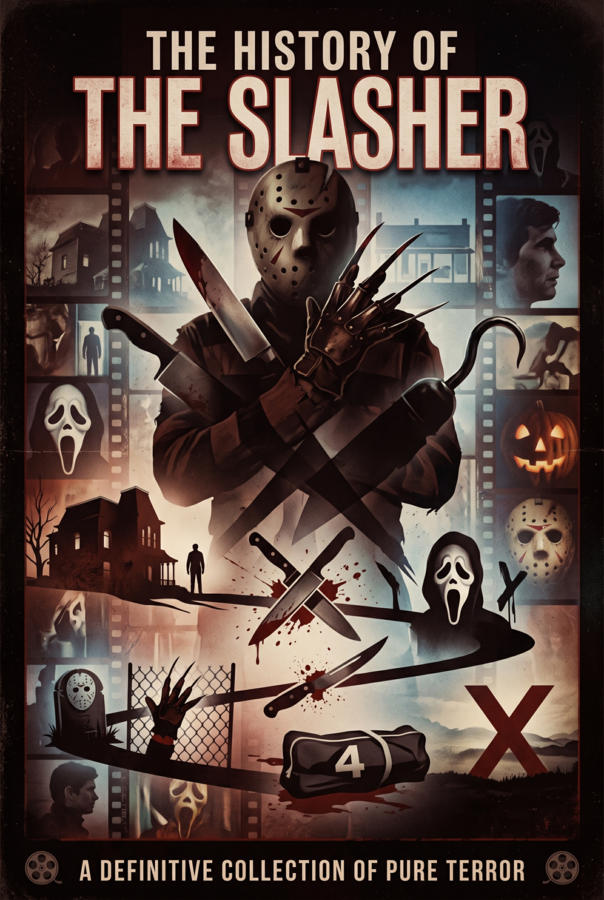 The History of the Slasher78 filmsThis isn't "horror movies where someone gets killed" — it's a specific structure: a fixed-identity killer working through a small, bounded group of victims one at a time, for a personal reason rather than a cosmic one, inside a bounded stretch of time and place. The genre's usual starting point is 1960, and even that's not as clean as it gets credit for. Psycho is barely a proto-slasher on close inspection — only Marion's murder is driven by actual desire; the killings of Arbogast and the attempt on Lila are cover-up killings, protecting a secret, which is a different engine entirely from a killer hunting people who did nothing but show up. Peeping Tom, released the same year, arguably hits more of the genre's real hallmarks — sustained killer's-eye-view shots through multiple murders, a female victim roster — despite being the less-credited ancestor. Neither film has to be a pure instance of what it started; an origin point just has to be the gravity well everything after it orbits. Black Christmas (1974) and Alice, Sweet Alice (1976) get the actual shape closer to right: a masked, unseen killer working a bounded group inside one location and stretch of time, years before anyone had a name for what that was. That's Halloween's job. Made for around $300,000 in 1978, it grossed roughly $70 million and set the conventions the genre would run on for the next decade: the mask, the holiday framing, a killer built to survive into a sequel. Once a movie that cheap could make that much money, every studio in town wanted one. Two adjacent genres are excluded on purpose. Giallo, over in Italy, runs on different rules entirely — a whodunit built around a killer whose identity is the mystery, more concerned with style and misdirection than a survivor fighting back. The two aren't unrelated: Mario Bava's 1971 giallo A Bay of Blood is the direct ancestor of the modern slasher kill scene, and Friday the 13th Part 2 lifts two of its murders almost shot for shot — but sharing an ancestor doesn't make two family trees the same tree. Splatter is excluded for a different reason, and it isn't about how much blood is on screen — The Texas Chain Saw Massacre, this genre's most famous exile, is one of the least graphic films of its era by that measure. What makes something splatter is what it's actually about: the deconstruction of the human body into other material. Leatherface's family isn't killing for revenge, sport, or inscrutable evil — they're former slaughterhouse workers displaced when the meat industry consolidated around them, converting the only material still available to them into food, furniture, and clothing, the way they used to convert cattle. That's a story about a body becoming a resource, not a killer working through a list of victims. A genuinely different genre, whatever it looks like side by side with this one. The rules keep moving after Halloween, too. Wes Craven's own New Nightmare (1994) turns the killer loose on the real actors and crew who made him famous, breaking the genre's fourth wall two years before Craven did it at mass scale with Scream — which didn't invent a new structure so much as make the audience's own genre-literacy part of the story. A franchise's founding film defining the genre doesn't commit every sequel to keep meeting that definition — and it doesn't run the other way either. A sequel whose killer picks up a stranger mythology than the original started with hasn't necessarily left the genre, as long as what's happening on screen hasn't changed; a backstory going supernatural is not the same event as a plot abandoning its killer for a conspiracy thriller. Inclusion here is judged film by film, on what's actually happening in it, not on the name on the poster.Read more
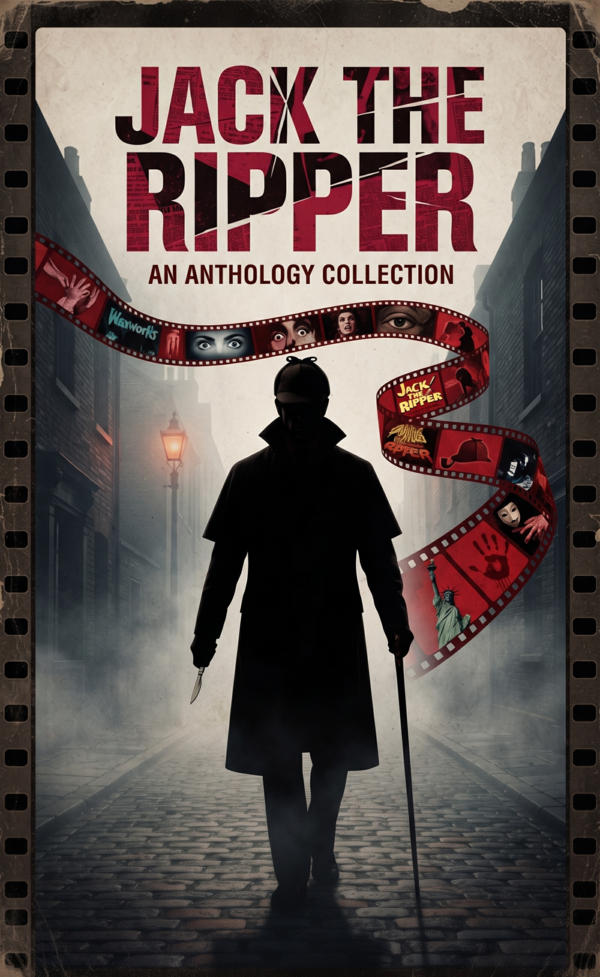 Jack the Ripper17 filmsThis collection tracks one unsolved 1888 murder case across nearly eight decades of world cinema, not a single settled genre. Jack the Ripper was never identified, and even his name is a media artifact: it comes from the "Dear Boss" letter sent to a London news agency that September, an item widely believed to be a hoax, quite possibly written by a journalist chasing circulation. There is no biography to adapt faithfully, only a myth assembled in real time by Victorian press coverage — which is why filmmakers from the silent era to the early 2000s could keep reauthoring him as investigator's quarry, psychological case study, gothic phantom, or conspiracy villain without ever contradicting a settled record. The films sit at two separate origin points for modern genre cinema. In Weimar Germany, Pandora's Box (1929) ends with its heroine killed by Jack the Ripper, a plot turn film historians read as part of the wider Lustmord ("lust murder") fascination running through German art and cinema after the First World War — the sexual murderer as a recurring anxiety figure in painters like Grosz and Dix and, soon after, in Fritz Lang's M. In Britain around the same time, Alfred Hitchcock adapted Marie Belloc Lowndes's 1913 novel The Lodger, itself directly inspired by the Ripper case, into the film he would later call "the first true Hitchcock movie" — laying down the wrongly-suspected-man suspense structure that shaped his career and, through him, much of the modern thriller. The Ripper's later screen life tracks a shift in how the culture talked about murder more broadly. From the 1970s on, the FBI's new behavioral-science work — credited with popularizing the term "serial killer" in America, though the concept has earlier German precedent from the 1930s — turned the repeat murderer into a subject for psychological profiling rather than Victorian mystery. The films of that era and after follow suit in spirit: pitting him against a rationalist detective as a puzzle to be solved, transplanting him into the present day as a fish out of water, or, in the case of the 2001 adaptation of Alan Moore's graphic novel, recasting the murders as a Masonic and royal conspiracy — a theory (Stephen Knight's, from 1976) that has since been largely discredited by historians but that gave the material a new, distinctly modern shape of villainy. What holds the set together, then, isn't a killer with a fixed story but the appetite around him: a Victorian press sensation that cinema has never stopped retelling, each era supplying its own explanation for who he was and why.Read more
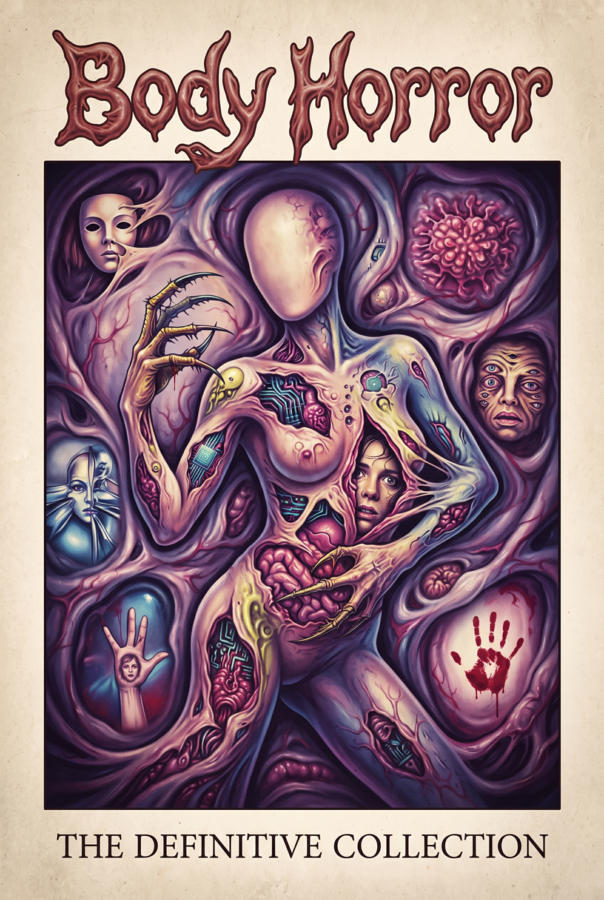 Body Horror132 filmsBody horror isn't about a killer, a ghost, or a monster coming from outside — it's about the body turning on itself. The threat here is internal: flesh, cells, or biology breaking from the person's own control, usually by degrees, usually with no consent involved. That's also what separates this from splatter or gore as a category: the effects can be as extreme as anything in horror, but the fear isn't really about the explicitness on screen. It's the idea that your own body might stop being yours. The term itself is younger than most of the films in it. Critic Philip Brophy coined "body horror" in a 1983 essay specifically to name a wave of films he saw breaking away from the slasher formula that had dominated horror since Halloween five years earlier — citing, as his own examples, the chestburster in Alien, the exploding head in Scanners, and the shape-shifting horror of The Thing. David Cronenberg is the genre's defining figure almost by consensus: Shivers, his 1975 debut, was widely read on release as a metaphor for venereal disease, and everything from Rabid through Videodrome built the same obsession into a body of work critics still treat as the genre's center of gravity. The Fly is both the genre's best-known film and its most contested one. Made and released as AIDS was becoming a fixture of public consciousness, critics and institutions from the time onward have read Seth Brundle's slow physical disintegration as a direct metaphor for the disease — the BFI itself frames the film that way. Cronenberg has pushed back on that specific reading more than once, saying he was aiming at something broader: aging, cancer, the general fact that bodies fail long before minds are ready to let them, and that he was genuinely surprised critics narrowed it to one disease that was only just entering wide public awareness while he was making the film. Both readings are still very much alive, which is arguably the most on-brand thing that could happen to a Cronenberg film. None of this started with cinema. Mary Shelley's Frankenstein, in 1818, is regularly cited as body horror's literary origin — a body assembled from parts, existing as a source of dread in itself. Kafka's The Metamorphosis, in 1915, gave the genre its other template: a man waking up transformed into something else entirely, for no stated reason, with no way back — a premise critics have pointed to directly as an influence on The Fly, nearly seventy years later. The genre cinema didn't invent the fear; it just found a way to put it on screen.Read more
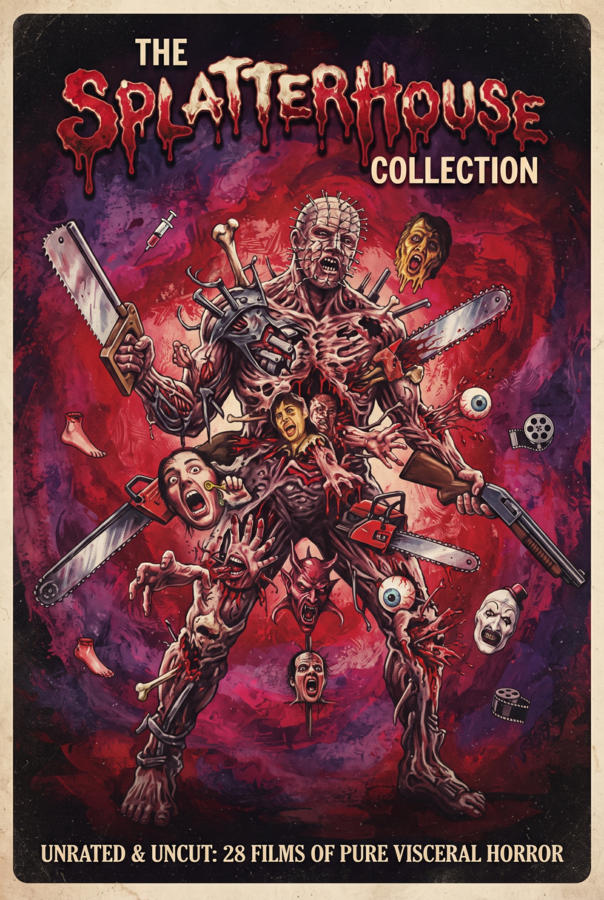 Splatter34 filmsSplatter horror is organized around one idea: the body's destruction shown in unmistakable, unambiguous visual detail is the point, not a shock tactic serving some larger mystery or dread. It's the deliberate opposite of suggestion. That opposite has a specific origin. Herschell Gordon Lewis and producer David F. Friedman had spent the early '60s making cheap softcore "nudie-cutie" films until the market saturated; looking for a new, unclaimed commercial niche, they reportedly considered and rejected "Nazi torture" and "con man evangelist" before landing on gore. The result, shot in about four and a half days, was Blood Feast (1963) — widely credited as the first actual splatter film, and a direct reversal of what Psycho had done just three years earlier: where Hitchcock suggested violence through editing and let black-and-white stand in for blood, Lewis showed full, saturated red in unflinching close-up and built an entire aesthetic around it. Lewis turned that into a repeatable business for the next decade — Two Thousand Maniacs!, Color Me Blood Red, and this collection's own The Wizard of Gore and The Gore Gore Girls — selling films on the gore itself as the primary draw, playing the same drive-in circuit his nudie films had already opened up. The next real leap in the American tradition came from ambition rather than shock value alone: Sam Raimi's Evil Dead films and Stuart Gordon's Lovecraft adaptations (Re-Animator, From Beyond) turned practical gore effects into genuine technical showmanship, something to be admired as craft rather than just endured. That specific American strain — gore as deliberate, skilled spectacle — is the lineage a Japanese wave of splatter films explicitly picked up decades later and pushed further. Yoshihiro Nishimura, a special-effects artist on films like Suicide Club before he started directing, has been called Japan's answer to Tom Savini; his Tokyo Gore Police and Helldriver are routinely described by critics as extending a "post-Evil Dead" tradition of practical gore into something even more extravagant, alongside a wider mid-2000s scene of Japanese "gonzo splatter" films built on the same premise. This genre's most extreme collision with the world outside the movie theater belongs to Cannibal Holocaust (1980). Ruggero Deodato's found-footage cannibal film was convincing enough that Italian authorities charged him with murdering his own cast, on the theory that the film's violence was real; he'd had his four lead actors sign contracts agreeing to disappear from public view for a year specifically to fuel that illusion, a promotional trick The Blair Witch Project would borrow, knowingly or not, nearly two decades later. Deodato beat the murder charge only by producing his actors alive in an Italian courtroom — but was still convicted of obscenity over the film's real, on-camera animal deaths, a separate and still-unresolved stain on the film's reputation that has nothing to do with its fictional violence at all. What holds this collection together across sixty years and at least two continents, then, isn't a shared plot or setting but a shared commitment to showing rather than implying — treated by Lewis as a commercial gap to fill, by Raimi and Gordon as a technical craft to master, by Nishimura as an American inheritance to escalate, and by Deodato as something realistic enough to nearly cost him his freedom.Read more
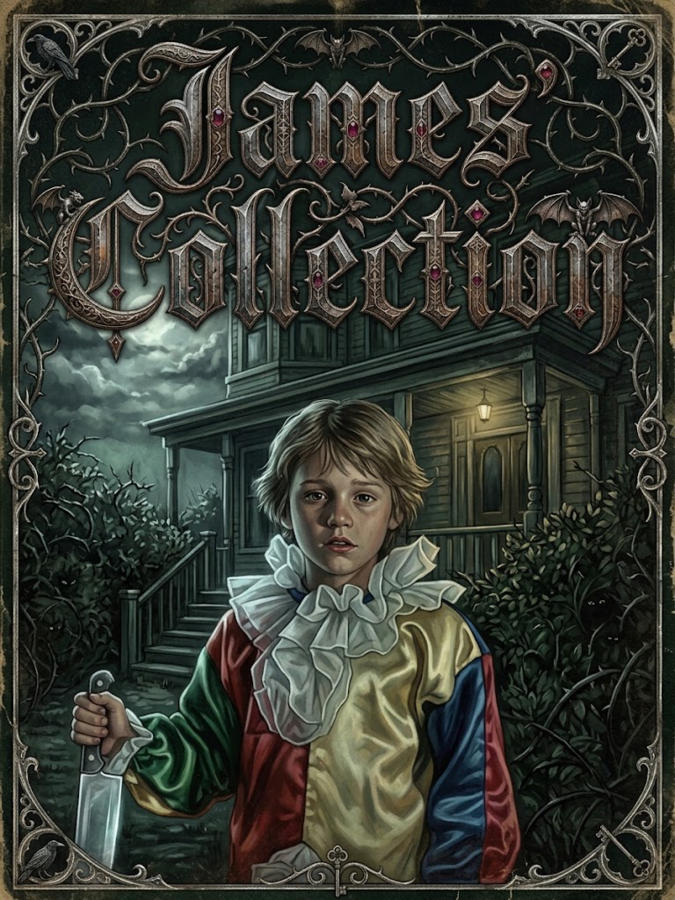 James Horror List32 filmsJames is 10 years old, but James likes scary horror movies. He is not allowed to watch just any old movie he wants, but he has talked his way into a few. This is the monument to the horror movies my nephew James has watched and survived.Read more
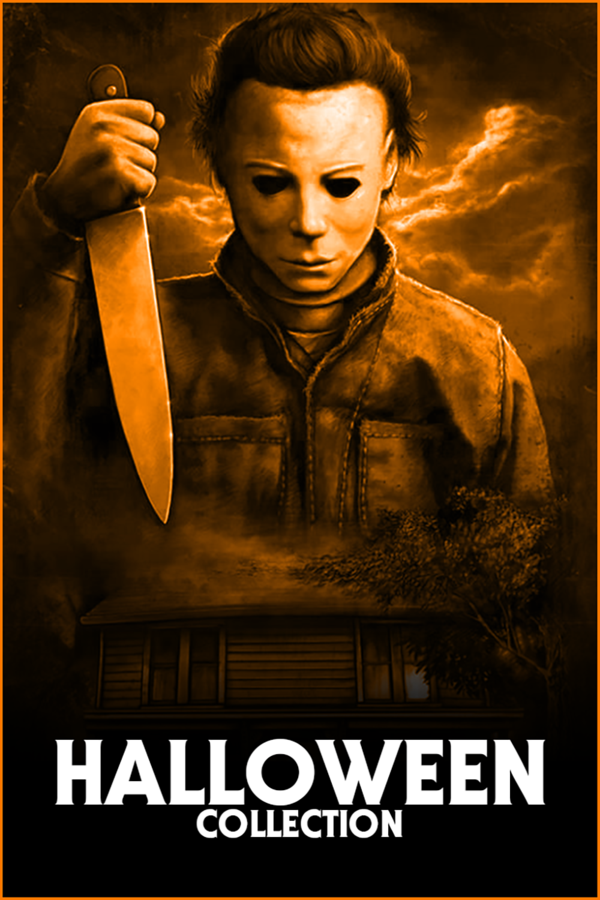 Halloween Collection15 filmsThis collection traces a single character across more than four decades, but the film that created him wasn't one person's singular vision — it's a good example of how these things actually get made. Producer Irwin Yablans came up with the premise and even the title first (retitled from The Babysitter Murders) and brought it to director John Carpenter, who wrote the script in an even split with producer Debra Hill: she wrote the babysitter characters, he wrote Loomis and Michael. Even that premise had a prior source — director Bob Clark, whose 1974 film Black Christmas had already put most of the genre's pieces in place, had once described to Carpenter, almost beat for beat, an idea for a hypothetical sequel about an escaped killer returning a year later, which he said he'd call Halloween, then declined to make himself. Financier Moustapha Akkad put up roughly $300,000 to let Carpenter make it anyway, on the condition of full creative control — which is how Michael Myers ended up credited only as "The Shape," a blank, silent figure Carpenter and Hill built specifically to avoid the psychological explanations later films would pile onto him. That modest investment became the highest return-on-budget in independent film history up to that point: roughly $300,000 turned into about $47 million domestically, $70 million worldwide, a record that stood until The Blair Witch Project two decades later. Some of that success was engineered rather than accidental. Hill and Carpenter cast Jamie Lee Curtis in her film debut in part because her mother, Janet Leigh, had played Marion Crane in Psycho — and they named the film's psychiatrist, Dr. Loomis, after a character in that same 1960 film, making the debt to Hitchcock explicit rather than incidental. That lineage was later given an academic name: Carol Clover's 1992 study of the genre coined the term "final girl" for the smart, watchful survivor who outlasts the killer, citing Laurie Strode alongside Psycho's Lila Crane as the template other films would keep reusing. There's a real irony in how the film was received relative to what it caused. Roger Ebert gave Halloween four stars on release and compared it directly to Psycho; his partner Gene Siskel gave it three and a half. Two years later, those same two critics built a televised campaign against what they called "women in danger" films, naming Friday the 13th as their central target for exactly the formula Halloween had introduced — while continuing to treat Halloween itself as the smart exception, not the source of the problem. The imitators got the blame; the original got a pass. The film's ownership tells its own story of continuity through disruption. Akkad produced every film in the original series himself until he was killed, along with his daughter, in the 2005 Amman hotel bombings; his son Malek Akkad kept the family's production company involved in the property afterward. The years since have produced at least three separate, mutually contradictory timelines — the original run, a mid-2000s remake duology, and a 2018 direct sequel that openly discarded every sequel between it and the 1978 original, made with Carpenter himself back on board as executive producer and composer for the first time in decades, alongside Malek Akkad still producing forty years after his father put up the money to make the original film at all.Read more
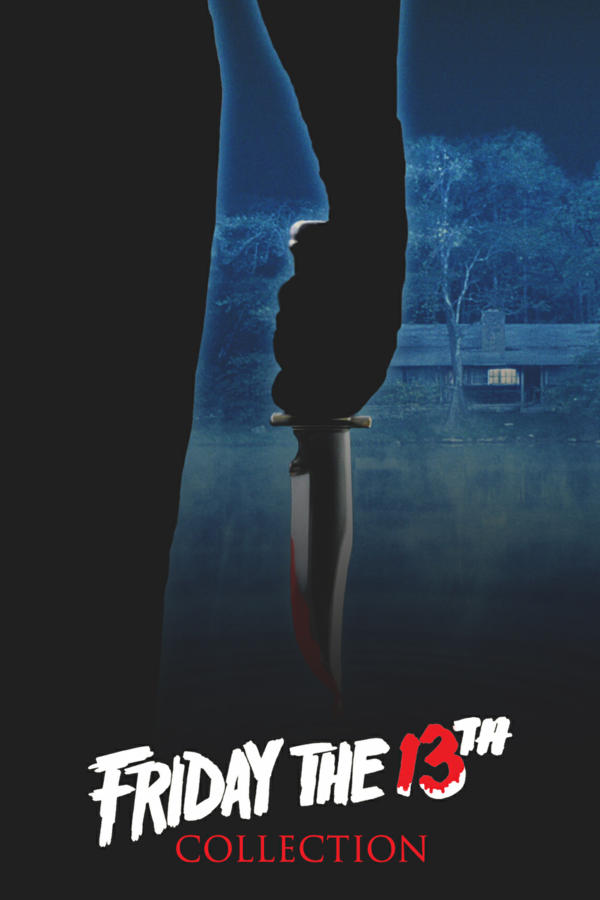 Friday the 13th Collection12 filmsThis is one continuous commercial franchise, not a shared myth assembled by different artists — twelve films made across nearly three decades from a single opportunistic gamble. Needing a hit, producer Sean Cunningham took out a Variety ad announcing "the most terrifying film ever made" under the title Friday the 13th before a script even existed, hoping to cash in directly on the runaway success of Halloween two years earlier. Made for around $550,000, it grossed close to $60 million and became the first independent slasher film picked up for distribution by a major studio, guaranteeing the sequels that followed. The character now synonymous with the series is himself a retrofit: in the original film the killer is Jason's mother, Pamela, avenging his drowning years earlier, and Jason appears only in one final jolt of a scare. He doesn't become the actual antagonist until the next film, and doesn't put on the hockey mask until the one after that. Alongside Halloween, this franchise set the commercial template for the "stalk and slash" cycle that dominated American horror through the mid-1980s: an isolated setting, a rising body count, and practical gore as the main selling point, courtesy of effects artist Tom Savini, fresh off Dawn of the Dead. The hockey mask itself only arrived with the third film in 1982, which was shot in 3-D to catch a brief revival of the format that also produced Jaws 3-D and Amityville 3-D that same year — a strange echo, thirty years on, of the same 3-D fad that had shaped 1950s horror. The series also landed at the center of a real critical fight over what these films were doing to their audience. Gene Siskel and Roger Ebert built a 1980 television special around what they called "Women in Danger" films, returning to Friday the 13th three separate times as their central example; Siskel's own newspaper review deliberately spoiled the killer's identity in a stated attempt to keep people out of theaters, and accused the ratings board of going easy on the studio. That fight played out picture by picture behind the scenes too — the second film alone was submitted to the MPAA eight times before enough gore was cut to avoid an X rating, a pattern that repeated through most of the decade. The films also trace a real change of studio hands. Paramount, which had backed the series from the start, eventually sold Jason's character rights to New Line Cinema, the studio built on A Nightmare on Elm Street — a deal that, after more than fifteen years of stalled scripts, finally let Jason meet Freddy Krueger on screen in 2003. The collection's final stop, a ground-up 2009 reboot, was produced under Michael Bay's Platinum Dunes as part of a broader mid-2000s strategy of relaunching 1970s and '80s horror properties for a new audience, the same approach the company had already used on The Texas Chainsaw Massacre and The Amityville Horror.Read more
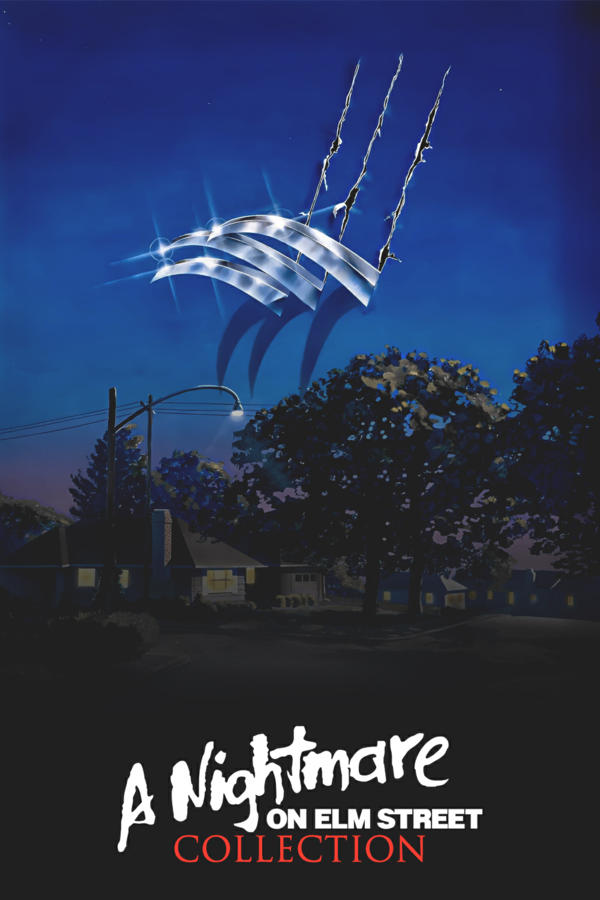 A Nightmare on Elm Street Collection8 filmsThis is one continuous franchise built around a single character rather than a genre umbrella, but its throughline is a genuine break from the slasher formula that came before it. Where Halloween and Friday the 13th built their killers as silent, masked, physically unstoppable presences, Wes Craven's 1984 original gave horror a villain who talks, jokes, has a face and a specific biography, and kills through a supernatural rule rather than a chase: Freddy Krueger, a child murderer freed on a legal technicality and burned alive in a boiler room by the vigilante parents of Springwood, who returns to hunt their children in their dreams, where death is real. Made for well under $2 million by New Line Cinema, then a small, financially struggling distributor of other people's films, it earned over $25 million in its domestic run alone and transformed the company into a genuine studio, earning it the nickname "the House That Freddy Built." That first film also did something no masked-killer slasher could: it used the dream setting to break the laws of physics on camera. Its two signature sequences — a girl dragged screaming across her own ceiling, and a boyfriend pulled into his mattress and expelled as a geyser of blood — were both shot on a single rotating set built and filmed upside down, a production so risky that when it spun the wrong way during filming it nearly electrocuted the crew. That set piece established the franchise's visual identity: horror staged inside dream logic rather than a realistic environment, which the sequels would keep pushing further. The character's own tone shifted deliberately partway through the series. After a second film that underperformed with critics despite outgrossing the original, New Line brought in director Chuck Russell and co-writer Frank Darabont for 1987's Dream Warriors specifically to save the franchise, and it's there that Freddy's now-defining trait — the wisecracking, showman quality Robert Englund brought to the role — was consciously introduced, turning him from a pure scare into a genuine pop-culture icon (and, over the sequels that followed, occasionally into self-parody). A decade later, Wes Craven returned to reclaim his creation with New Nightmare (1994), a meta film in which the actors and crew of the original are stalked by a Freddy who has escaped fiction itself — a dry run, made two years ahead of time, for the self-aware approach Craven would popularize with Scream. The corporate history behind the films tracks the wider horror industry, too. New Line eventually had to negotiate with Paramount, which held Jason Voorhees's rights, to finally stage Freddy vs. Jason in 2003 after roughly sixteen years of stalled scripts. And the 2010 remake came from Michael Bay's Platinum Dunes — the same production company that, a year earlier, had already rebooted Friday the 13th — as part of a broader, deliberate strategy of relaunching 1970s and '80s horror properties (Texas Chainsaw Massacre, Amityville Horror) for a new audience. It made money and was dismissed by critics, effectively closing out that studio's run of horror remakes.Read more
 The Omen Collection5 filmsSupernatural horror series centered around Damien Thorn, the Antichrist.Read more
 Child's Play Collection6 filmsA horror film series franchise featuring Chucky, a killer Good Guys doll with the soul of a notorious serial killer.Read more
 Saw Collection11 filmsA mysterious murderer gives his victims macabre riddles they must solve to earn their freedom.Read more
 Insidious Collection6 filmsA series of American horror films where the plots are depicted as case files of demonologists. The first two films center on a couple who, after their son mysteriously enters a comatose state and becomes a vessel for ghosts in an astral plane, are continuously haunted by demons of a hellish realm known as the Further until they take from the family what they want most: life. The third film, a prequel, focuses on the same psychic that helped the family this time come to the aid of a young girl who calls out to the dead, and the fourth follows her when her own family becomes haunted. All plots are depicted as case files of demonologists.Read more
 [REC] Collection4 filmsThis collection follows a single quarantined apartment building across four films, two directors, and a genuine mid-series identity crisis about what kind of horror it actually is. Jaume Balagueró and Paco Plaza's original REC (2007) was made for about $2 million and grossed roughly $32.5 million — a TV reporter and her cameraman, riding along with Barcelona firefighters for a routine night-shift segment, get sealed inside an apartment building along with everyone else after an elderly tenant turns violently, contagiously feral. It played entirely as a straight infected-outbreak film, close enough to 28 Days Later's rage-virus logic that critics reached for exactly that comparison, fused to the handheld, real-time dread of The Blair Witch Project. It worked well enough that an American remake, Quarantine, was already in theaters barely a year later, following the same building almost beat for beat. What makes this specific franchise worth tracking as a whole rather than just its first film is the swerve REC 2 (2009) makes with that premise. The virus everyone had been running from turns out not to be a virus at all in any ordinary sense: a government operative trapped inside the building at the end of the first film is revealed to be a Vatican priest, sent to recover a blood sample from a possessed girl the Church had been secretly studying in the building's penthouse, hoping to isolate whatever biological agent might explain demonic possession as a treatable condition. The infected aren't victims of a disease so much as something closer to a hive mind, extensions of one possession spreading outward. That's a real structural choice, not just a twist for its own sake — the same outbreak gets played completely straight as contagious science in the first film and completely straight as literal, Church-sanctioned religious horror in the second, without the story ever winking at the contradiction. The found-footage form itself doesn't survive the full run. Balagueró and Plaza co-directed the first two films together, then split: Plaza took the third film, REC 3: Génesis, alone, setting it at a wedding reception and abandoning the handheld conceit partway through for conventional cinematography and a much darker sense of humor, chainsaw included. Balagueró made his own film elsewhere in between, then returned to close out the story solo with REC 4: Apocalypse (2014), also shot conventionally, resolving Ángela Vidal's arc on a ship at sea. What began as one continuous, single-location, single-camera nightmare ends as something closer to a traditional horror franchise that happens to share a mythology with the film that started it.Read more
 The Purge Collection5 filmsThe Purge Collection unfolds in a dystopian America where all crime is legal for one night each year. Blending horror, action, and social commentary, it explores themes of survival, morality, and systemic control through intense, suspenseful storytelling and a chilling vision of sanctioned chaos.Read more
 Psycho Collection4 filmsRobert Bloch was writing the novel this collection is based on roughly forty miles from Plainfield, Wisconsin, when police searched Ed Gein's farmhouse in November 1957 and found what they found. Bloch has said the mother-obsessed, cross-dressing killer at the center of his book was substantially his own invention, already mostly written before Gein's arrest made headlines — and that he was genuinely unsettled by how closely his fictional psychology ended up matching the real case once the details came out. That same Wisconsin case would go on to seed two more of American horror's defining villains: Leatherface fourteen years later, and Buffalo Bill seventeen years after that. Three of the genre's most significant killers, three different decades, one obscure real one. Paramount wanted nothing to do with the material, so Hitchcock financed the film largely himself, through his own television production company, and shot it in black and white with his TV crew and comparatively unknown actors — partly to keep costs under a million dollars, partly because he judged the shower scene would be unwatchable in color. Paramount, expecting it to fail, deferred most of the box office to Hitchcock personally rather than fight him over a picture they didn't want; it grossed something like $50 million, and he kept the bulk of it. The marketing turned into genre history on its own terms: Hitchcock instituted a strict no-late-admission policy, breaking with the standard practice of the era, where audiences wandered into a picture whenever and simply stayed through the next showing to catch what they'd missed. Theater signs informed audiences that no one would be admitted after the film started, "not even the manager's brother, the President of the United States, or the Queen of England." It created lines around the block, and it permanently changed how American theaters ran their showings. The sequels track an unusual, fairly graceful decline rather than a franchise running itself into the ground. Psycho II arrived twenty-three years later with essentially no audience clamoring for it, and was unusually well received for a legacy sequel to an untouchable classic. Psycho III, in 1986, was directed by Anthony Perkins himself — an actor who'd spent two decades fighting the way this one role had defined his entire career, choosing to finally take ownership of it from behind the camera rather than continue being typecast by it from in front of one. By Psycho IV: The Beginning in 1990, the series had quietly moved off movie screens entirely, landing as a cable television film built around flashbacks to a young Norman and his mother — origin story rather than continuation, and the last stop for a character who'd started out defining what a movie murderer could be.Read more
 Scream Collection7 filmsKevin Williamson was watching a TV special about a real serial killer when the idea for this franchise actually started. In 1994, alone at home, he put on a program about Danny Rolling, the so-called "Gainesville Ripper," who had murdered five University of Florida students over four days in August 1990 and staged their bodies for whoever found them. Partway through, Williamson noticed a window in his own house was open, and the wave of real fear that followed is what he's credited as the direct seed for Scream's opening: a woman home alone, answering a stranger's call, being asked if she likes scary movies. The film was originally titled Scary Movie. Wes Craven directing it wasn't the obvious outcome it looks like in hindsight. He'd just come off A New Nightmare (1994), a genuinely clever meta-slasher that flopped at the box office, and by most accounts was ready to leave horror behind entirely by the time Williamson's script landed on his desk. The genre itself was in roughly the same position: slasher sequels had spent the early '90s getting progressively cheaper and worse, and by December 1996 the format looked essentially dead. Scream didn't just succeed, it single-handedly revived the genre and set off a new wave of imitators almost immediately — meaning the thing that's now remembered as horror's smartest reinvention came from a director who'd just watched his own first attempt at the same trick fail, one franchise entry earlier. What makes this collection genuinely unusual is how far the self-awareness goes, and how long it's been sustained. Starting with Scream 2, the films invented an in-universe slasher franchise called Stab, explicitly based on the real Woodsboro murders from the first film — meaning the characters inside this story can watch dramatized, increasingly disappointing sequels about their own trauma, which lets the real films comment on their own sequels without ever breaking the fourth wall to do it directly. The 2022 film pushes that same trick onto the franchise's own revival. It's a requel — a legacy sequel that brings back original cast alongside new characters — and rather than pretend otherwise, one character explains the term out loud on screen, and the plot is literally about a killer trying to "fix" a disappointing new Stab sequel by recreating the original murders exactly. It's the same meta-move the 1996 film made about slasher conventions generally, aimed this time at the specific commercial trend — Halloween's 2018 legacy sequel chief among them — that the new Scream was itself cashing in on. Twenty-six years apart, it's the same joke, told about a genre the films themselves had already changed once.Read more
 Scary Movie Collection6 filmsScary Movie is a 2000 horror comedy spoof film directed by Keenen Ivory Wayans. It is an American dark comedy that heavily parodies the horror, slasher, and mystery genres. Several mid- and late-90s films and TV shows are spoofed, especially Scream, along with I Know What You Did Last Summer, Buffy the Vampire Slayer, The Sixth Sense, The Usual Suspects, The Matrix, The Blair Witch Project, and Dawson's Creek. Scary Movie was followed by five sequels: Scary Movie 2 (2001), Scary Movie 3 (2003), Scary Movie 4 (2006), Scary Movie 5 (2013), and Scary Movie 6 (2026). Its title serves as an homage to the production title of Scream, which was also released through Dimension Films.Read more
 The Howling Collection5 filmsA collection of "The Howling," (1981-2011) Series includes: The Howling (1981) Howling II: ... Your Sister Is a Werewolf (1985), Howling III (1987) Howling IV: The Original Nightmare (1988) Howling V: The Rebirth (1989) Howling VI: The Freaks (1991) The Howling VII: New Moon Rising (1995) The Howling: Reborn (2011)Read more
 Evil Dead Collection4 filmsSam Raimi and Bruce Campbell grew up together in Michigan and had been making Super-8 shorts since they were teenagers. To prove they could pull off something bigger, they shot a seven-minute short called Within the Woods for $1,600 — not meant as a rough draft of the eventual film, by Raimi's own account, but purely as something to show investors. It worked: a lawyer friend advised them on how to structure a production, and they raised roughly $90,000 largely from Michigan doctors and dentists willing to gamble on a couple of local kids. Bruce Campbell put up his own family's Northern Michigan property as collateral to finish the film and blow it up to 35mm for theatrical release. After a genuinely brutal shoot in a remote Tennessee cabin, the finished film premiered at a hometown theater in Detroit to, in Campbell's words, "a thousand curious relatives, investors and ex-high school pals." What actually got the film seen beyond that room was Stephen King. A producer got it in front of him at Cannes, and King was moved enough to write a full review in Twilight Zone magazine calling it "ferociously original" — a quote Raimi has said made all the difference: "Without that, the movie may have been lost, but with King's endorsement, we were able to make our first sales." Released unrated in the U.S. to dodge an X rating, it built its reputation on the midnight-movie circuit rather than a wide release, and ended up on the UK's notorious "video nasty" list in 1983, part of a wave of horror films British authorities tried to ban outright that year. The two sequels have a stranger relationship to each other and to the original than a normal trilogy, and it isn't by design — it's because of who owned what. When Raimi made Evil Dead II, his team didn't hold the rights to use actual footage from the first film, which a different company controlled. Their fix was to reshoot a condensed "recap" of the original's plot with different actors standing in for the earlier cast, as though it were archival footage, before picking the story back up where the real film left off. Bruce Campbell has described the result bluntly: "It's a requel! It's whatever you wanna call it!" The same rights problem hit again on the next film — the name "Evil Dead" itself couldn't legally be used for it — so Army of Darkness had to reinterpret the ending of Evil Dead II rather than continue directly from it. Each entry's connection to the one before it is a legal workaround dressed up as a creative choice. Army of Darkness has its own odd history underneath that: it was originally announced under the title Evil Dead II: Evil Dead and the Army of Darkness, before producer Dino De Laurentiis pushed for something closer to the original's tone for what actually became Evil Dead II, bumping the medieval concept to a third film instead. Despite strong reviews, it was a genuine box-office disappointment that effectively closed out the trilogy's theatrical run — fittingly, for a film whose own ending was unsettled enough to exist in two different versions, both sitting in this collection side by side.Read more
 Recent Horror Movies279 filmsThe dominant story in horror over this stretch is the same one running through most of the rest of this library: franchises that started thirty or forty years ago keep getting reopened. 2025 alone saw multiple decades-old properties come back in the same calendar year — Danny Boyle's 28 Years Later reviving a franchise dormant since 2007, I Know What You Did Last Summer getting a legacy sequel with its original cast, Scream and Insidious both adding new installments — enough of a pattern that trade coverage was openly calling it a "1990s revival" year. It's the same commercial logic this whole library keeps running into: a built-in audience is a safer bet than an original pitch, so the industry keeps going back to the same twenty-five-to-thirty-year-old well. Which makes Sinners the most interesting thing to happen in horror during this window, because it's the exception that actually worked. Ryan Coogler's 2025 film — vampires, 1930s Mississippi Delta blues, Michael B. Jordan playing twin brothers, a $90 million budget with zero pre-existing IP behind it — had no franchise, no built-in audience, and no safety net, in a year when most of the genre's biggest swings were sequels to things from before half the cast was born. It didn't just succeed, it became a genuine cultural event: a 98% critics' score, a matching audience score, and the first R-rated horror film ever to earn an A on CinemaScore, a grading system where even films as acclaimed as Nope and A Quiet Place Part II had topped out at A-. It opened bigger than any R-rated film ever had on Easter weekend and kept climbing from there. For a genre that mostly survives on cheap, safe bets — the microbudget Blumhouse model that shows up again and again across this library — an expensive, wholly original swing paying off this completely is genuinely rare air. That's really the tension defining horror right now: a genre still overwhelmingly built on returning to what already worked, right alongside proof that audiences will show up in force for something that owes nothing to anyone's childhood. Both instincts are represented in this collection, because right now, both are true at once.Read more
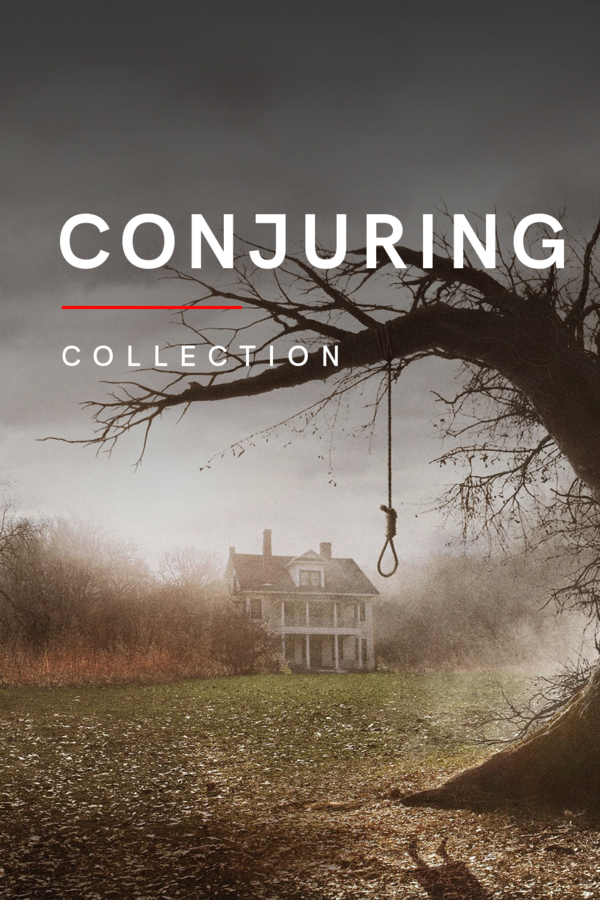 The Conjuring Collection9 filmsA supernatural horror film series that started The Conjuring Universe and follows Ed and Lorraine Warren, paranormal investigators and authors associated with prominent cases of haunting.Read more
 Final Destination Collection6 filmsFinal Destination is a series of horror films centered on the themes of fatalism, predestination, and precognition, in relation to death.Read more
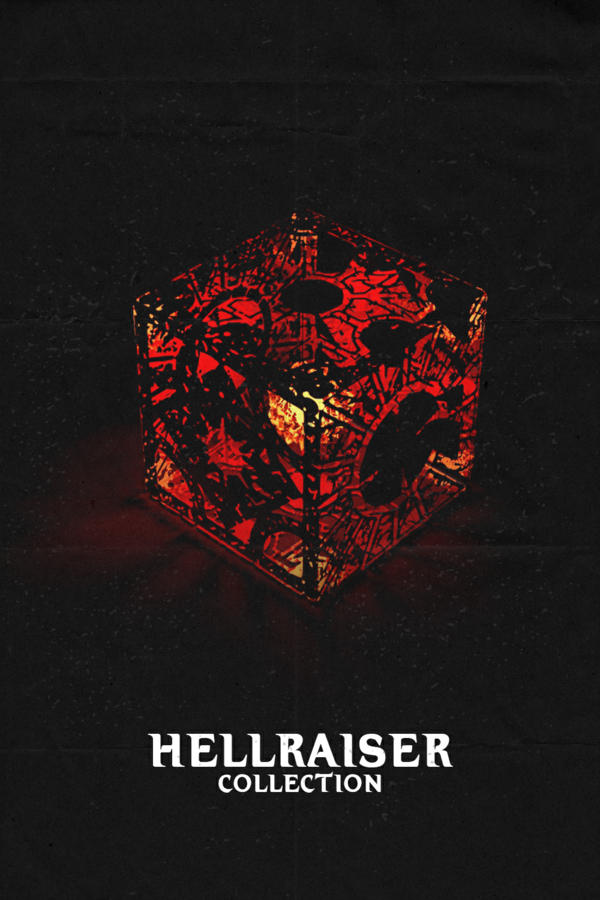 Hellraiser Collection5 filmsClive Barker wrote the novella this collection is based on, The Hellbound Heart, specifically because he'd been burned once already. He'd written the screenplay for 1985's Underworld and was unhappy with how the producers handled his material — so his answer was to write something original enough, and disturbing enough, that he could insist on directing it himself. Hellraiser (1987) became his first feature as a director after only two short films, and by his own account he went into it barely prepared — he's said he tried to find library books on how to direct a movie and both available copies were already checked out. He remembered the shoot fondly anyway, saying the cast and crew treated his "ineptitudes" kindly. Made for roughly $1 to 1.5 million, it grossed over $30 million, and picked up horror's most quoted seal of approval along the way: Stephen King calling it "the future of horror." Not everyone agreed at the time — Roger Ebert hated it enough to turn King's own line back on Barker in his review, closing with "I have seen the future of implausible plotting, and his name is Clive Barker." It's worth knowing both reactions existed simultaneously, not just the one that ended up on the posters. What made the film genuinely different at the time is easy to undersell now that Pinhead is genre-iconic: this wasn't a slasher, and its villain wasn't a boogeyman with a motive. The Cenobites are explorers of sensation who can't distinguish pleasure from pain, summoned by a puzzle box rather than stalking anyone personally — closer to an indifferent natural force people accidentally invite in than a killer hunting a victim. Barker didn't keep control of that idea for long. As part of the deal that let him direct the first film, he sold the franchise rights for roughly a million dollars, which meant he had progressively less say over what came next — executive producer credit only on the second and third films, then nothing more than a "characters by" line after that. The quality drop-off across the sequels people often notice isn't mysterious; it's the direct, contractual consequence of that first deal. Bloodline, the fourth film and the last one this franchise got a real theatrical release for, is where that drift became outright chaos. Original director Stuart Gordon — the Re-Animator filmmaker — left the project over creative differences before shooting even began. His replacement, makeup effects artist Kevin Yagher making his own feature directing debut, delivered a cut Miramax executives hated enough to order extensive reshoots and bring in a second director, Joe Chappelle, to shoot new material leaning hard into a "Hellraiser in space" angle that hadn't been the film's original emphasis. The finished film was trimmed from 110 minutes down to 85. Both directors were unhappy enough with the result that both took their names off it using the Alan Smithee pseudonym — a rare case of two different people disowning the same film. It made $9.3 million on a $4 million budget, a disappointing enough return that every Hellraiser film after this one went straight to video. This collection's stopping point isn't arbitrary; it's exactly where the franchise stopped being something a studio would put in theaters.Read more
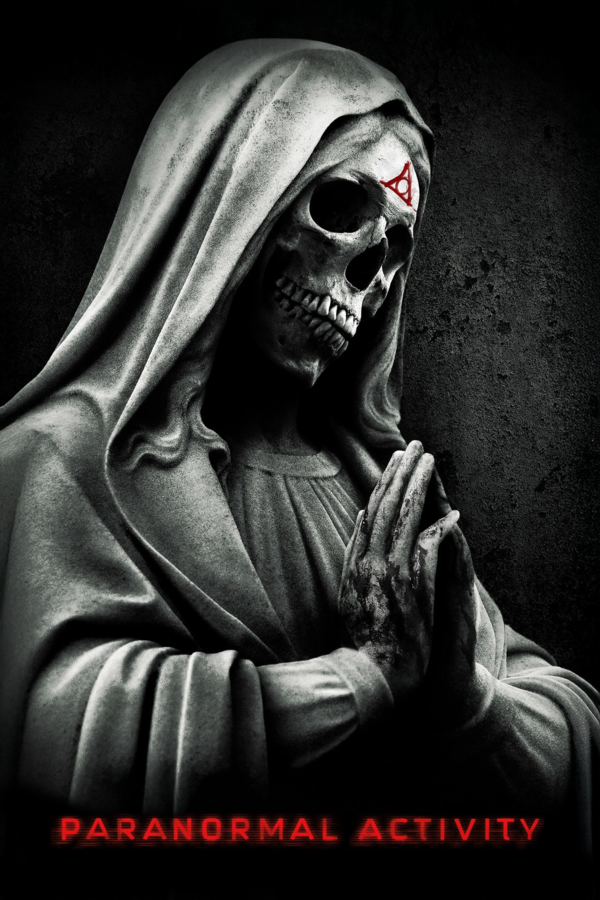 Paranormal Activity Collection7 filmsOren Peli had never made a film before this one. He was a video game programmer with no filmmaking background who shot the original Paranormal Activity in seven days inside his own actual San Diego house, on a budget reported between $11,000 and $15,000 — a figure so small it barely counts as a rounding error next to most of what's in this library. Sundance rejected it. It eventually found smaller festival slots at Screamfest, Slamdance, and Telluride instead, building a reputation the slow way. One of the people who helped it along early is a familiar name by now: Jason Blum, before Blumhouse had made anything close to the name it has today, got involved and helped Peli edit and refine the film. That's the same producer who'd go on to back Insidious with Peli himself a few years later, and much of the rest of what's built this library's recurring pattern of cheap horror turning into massive returns. This is close to where that whole ecosystem starts. What happened next is genuinely unusual, not just another lucky festival-to-theaters story. A DreamWorks executive saw the film, loved it, and pushed it up the chain until it reached Steven Spielberg himself, who championed it enough to get the rights acquired and eventually handed to Paramount. Spielberg's involvement wasn't just a name lending prestige, either — Peli has said directly that test audiences weren't satisfied with his original ending, and one of the replacement ideas they tried actually came from Spielberg, becoming the ending that plays in the theatrical cut. Paramount then ran an unusually inventive grassroots release: posters in the first thirteen cities were stamped "Demand It," pointing audiences to a site where they could vote for the film to open near them, and when the campaign crossed a million votes, Paramount rolled it out nationwide — where it hit number one in only its second week, beating every big-budget wide release out at the same time. One detail worth mentioning but not fully trusting: the widely repeated story that Spielberg was so unsettled by his screener that he had his bedroom door locked and the DVD removed from his house. It's genuinely famous, but different tellings disagree on basic details like which side of the door the lock was on — usually a sign a story has been embellished across retellings rather than pinned down by one solid source.Read more
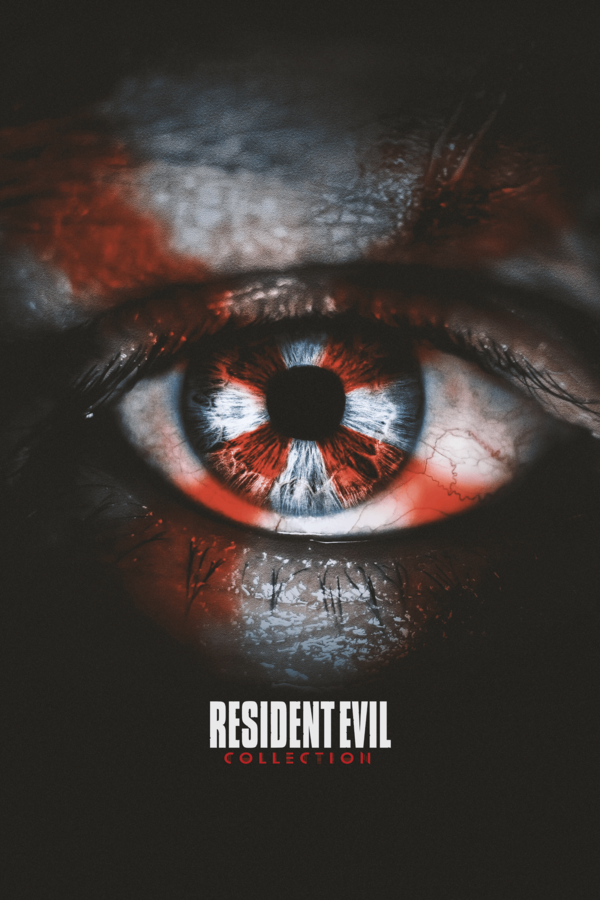 Resident Evil Collection6 filmsLoosely based upon the Capcom video games of the same name, the Resident Evil film series follows the protagonist Alice, a character created for the films. The Umbrella Corporation acts as the main antagonist, a bio-engineering pharmaceutical company responsible for formulating the T-virus, which results in a zombie infection outbreak.Read more
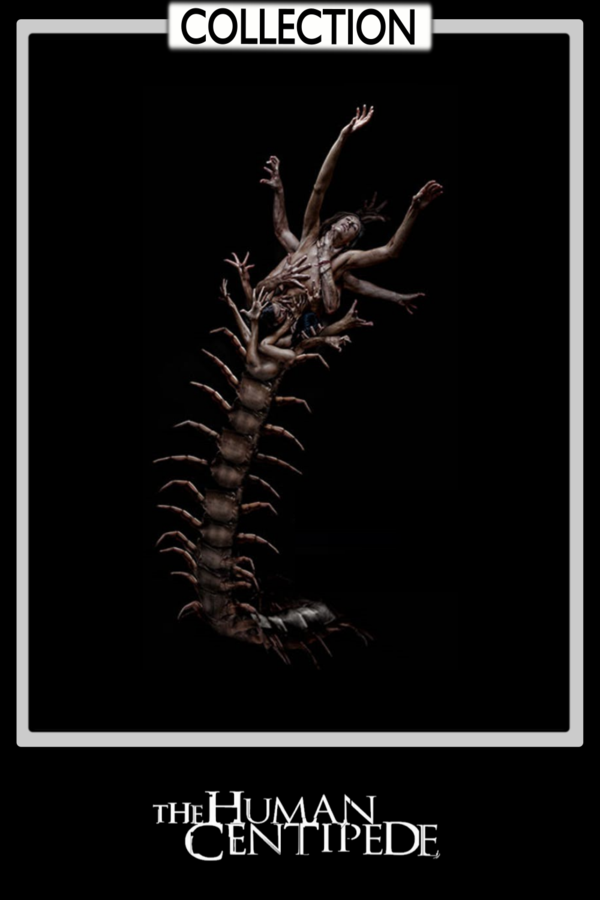 The Human Centipede Collection3 filmsThis trilogy is built around something that actually happened to it in the real world, not just what happens on screen. The first film, about a retired surgeon who kidnaps tourists to stitch together into a single shared digestive system, got a standard adult certificate without major incident. The second film did not. In 2011, the BBFC refused to classify The Human Centipede 2 outright — not a cuts request, an outright refusal — specifically citing "a strong focus throughout on the link between sexual arousal and sexual violence" and ruling that the content ran through the entire work closely enough that cuts weren't even a viable fix. It's one of a genuinely small number of films the board has refused to certify at all since 2000. Tom Six eventually got a UK release months later after agreeing to more than two and a half minutes of cuts across 32 separate edits. What makes that ban worth knowing about specifically, rather than just a footnote, is what the second film is actually about: a man who becomes sexually obsessed with a DVD of the first Human Centipede movie and sets out to recreate what he saw in it, badly and with far less surgical skill. The real first film exists as a real object inside the fiction of the second one. Several critics pointed out the irony at the time — a film built around a pointed, ugly argument against the idea that watching something violent turns ordinary people violent got banned by a board acting on more or less that exact premise. Whether or not the argument works as cinema, the censorship fight it set off wasn't incidental to the film's meaning; it was close to the film's whole point, playing out for real. The franchise's cultural reach ended up wider than its content would suggest: the original became notorious enough to get a full parody episode of South Park ("HUMANCENTiPAD"), and Roger Ebert's contemporary review captured something real about its intent, writing that it seemed "deliberately intended to inspire incredulity, nausea and hopefully outrage." Whatever else it is, provoking exactly that reaction, from casual viewers and from an actual national censorship board alike, is the one thing every film in this trilogy can be said to have accomplished on purpose.Read more
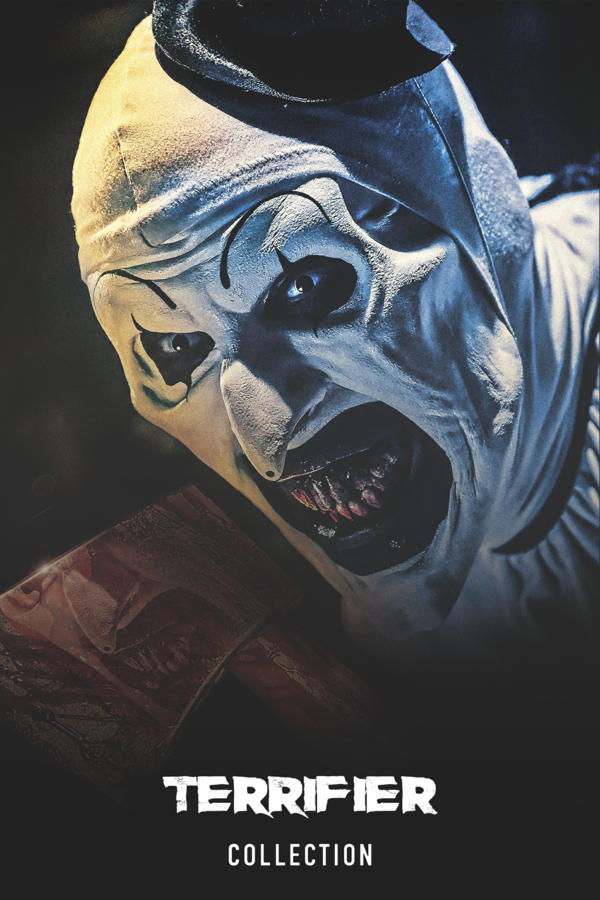 Terrifier Collection4 filmsMovies of the horror franchise created by Damien Leone.Read more
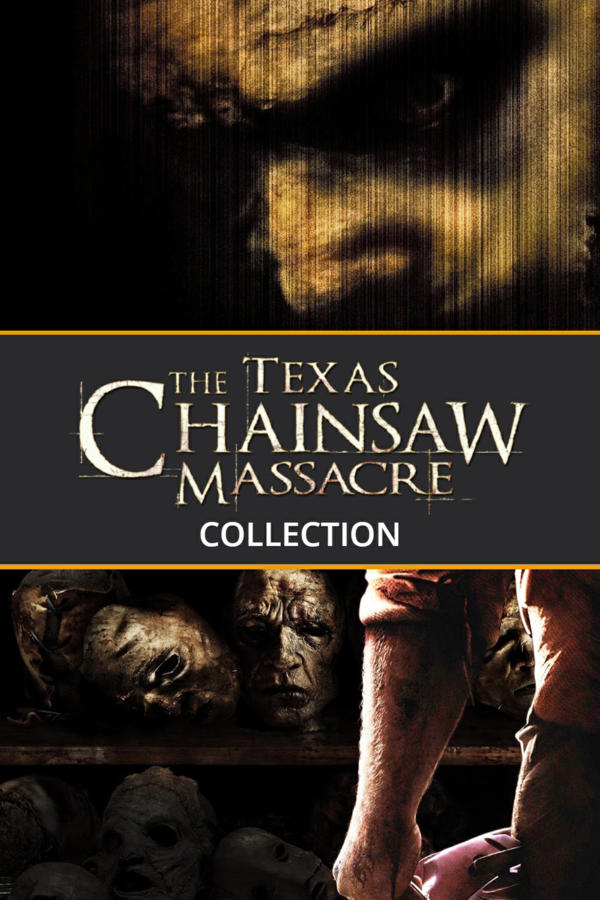 Texas Chainsaw Massacre Collection5 filmsSeries of cannibal slasher films focused on Leatherface and his family, who terrorize unsuspecting visitors to their territory.Read more